Why This West Virginia Project Mattered
After our first U.S. cabin kit delivery in Montana, we had a much clearer understanding of what a successful U.S. prefab cabin kit project needed.
A good A-frame cabin kit project is not only about producing the wooden cabin kit correctly. The full process matters: packaging, freight, customs, site access, unloading, local equipment, weather, crew readiness, and clear assembly support.
West Virginia became the first major example where many of those lessons came together in a smoother way.
The site was more organized. The customer had previous building experience. The local team was directly involved. They also had a telehandler on site, which made a major difference during assembly.
There were still real construction conditions, including rain delays and labor limits, but compared with our first U.S. project, the process was much more predictable.
Why Rick Chose Stella 70
Before placing the order, Rick visited us in Türkiye.
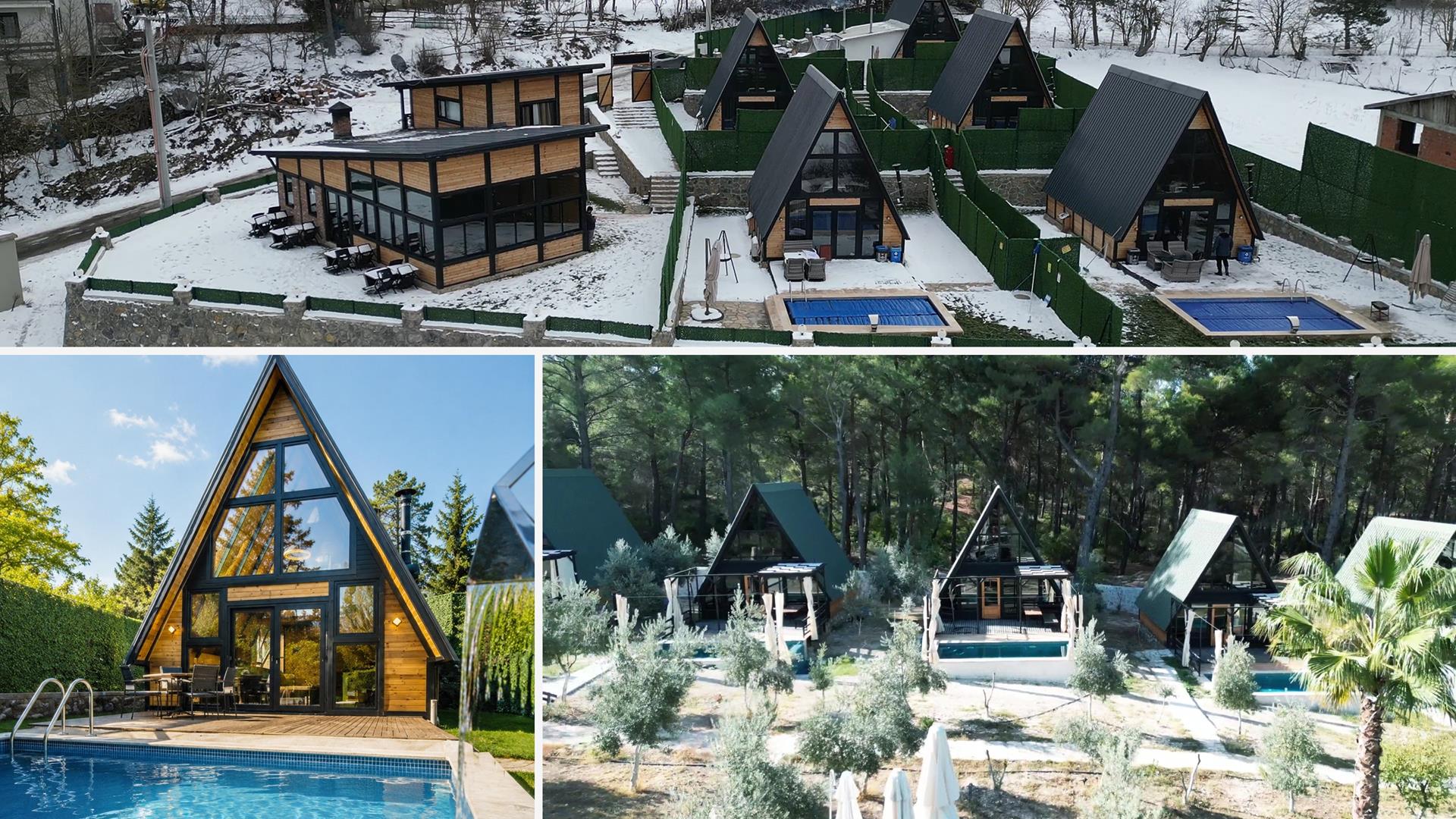
At first, he was mainly considering the Stella 53, our more compact A-frame cabin kit. During the visit, he saw the model in person and also visited a cabin hotel project where Stella 70 units were already in use.
After seeing both options, he decided that Stella 70 was the better fit for his West Virginia rental cabin project.
That decision made sense. Stella 70 offers more interior volume and a stronger guest experience than the smaller Stella 53, while still staying efficient as a prefab cabin kit for transport and assembly.
It was also one of our most tested A-frame cabin models, with more than 100 previous installations in Türkiye and similar rental cabin projects.
For West Virginia, Rick was not choosing an experimental model. He was choosing a proven cabin kit design and adapting it to a U.S. rental property.
Three Stella 70 A-Frame Cabin Kits for Rental Use
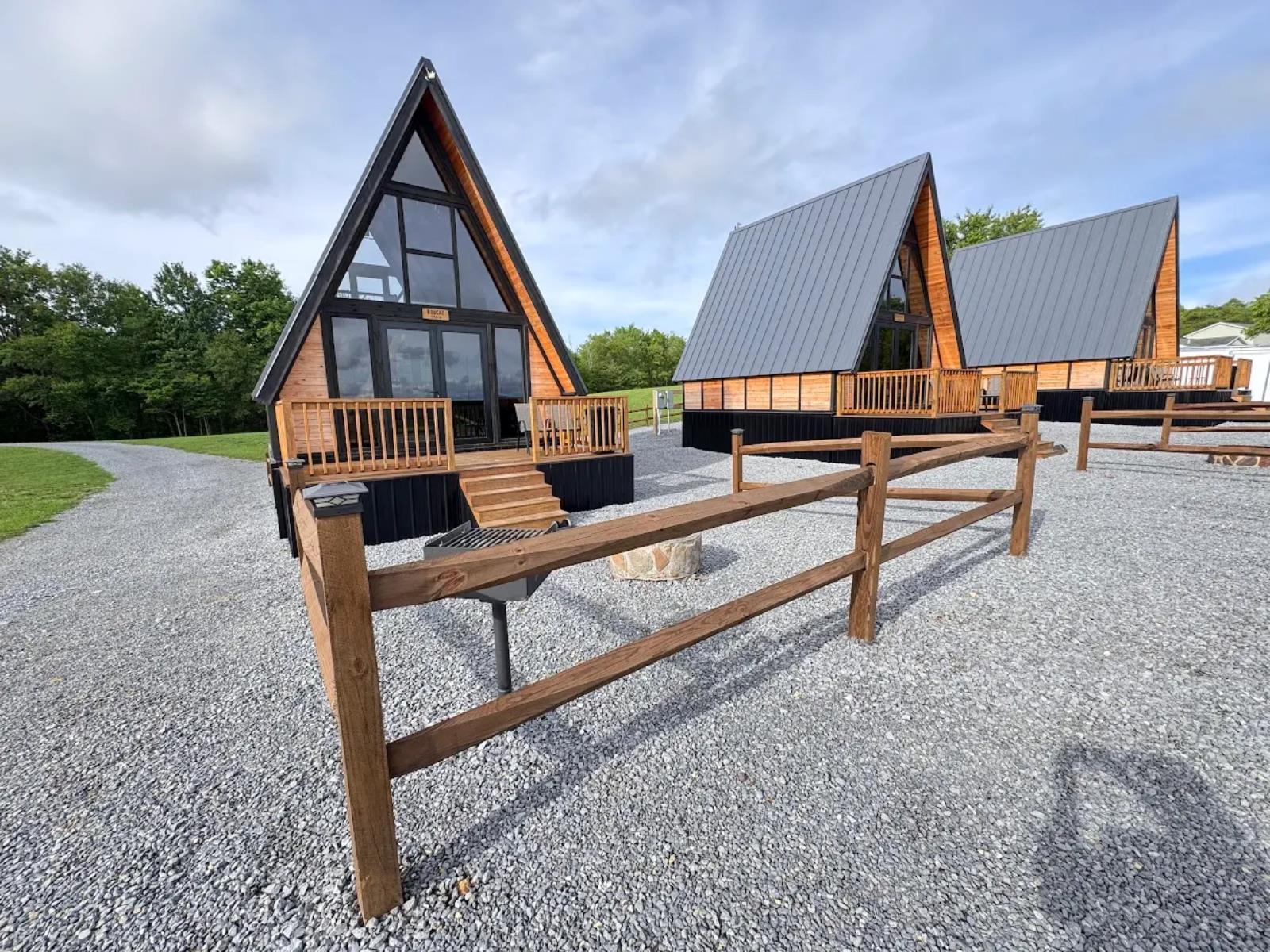
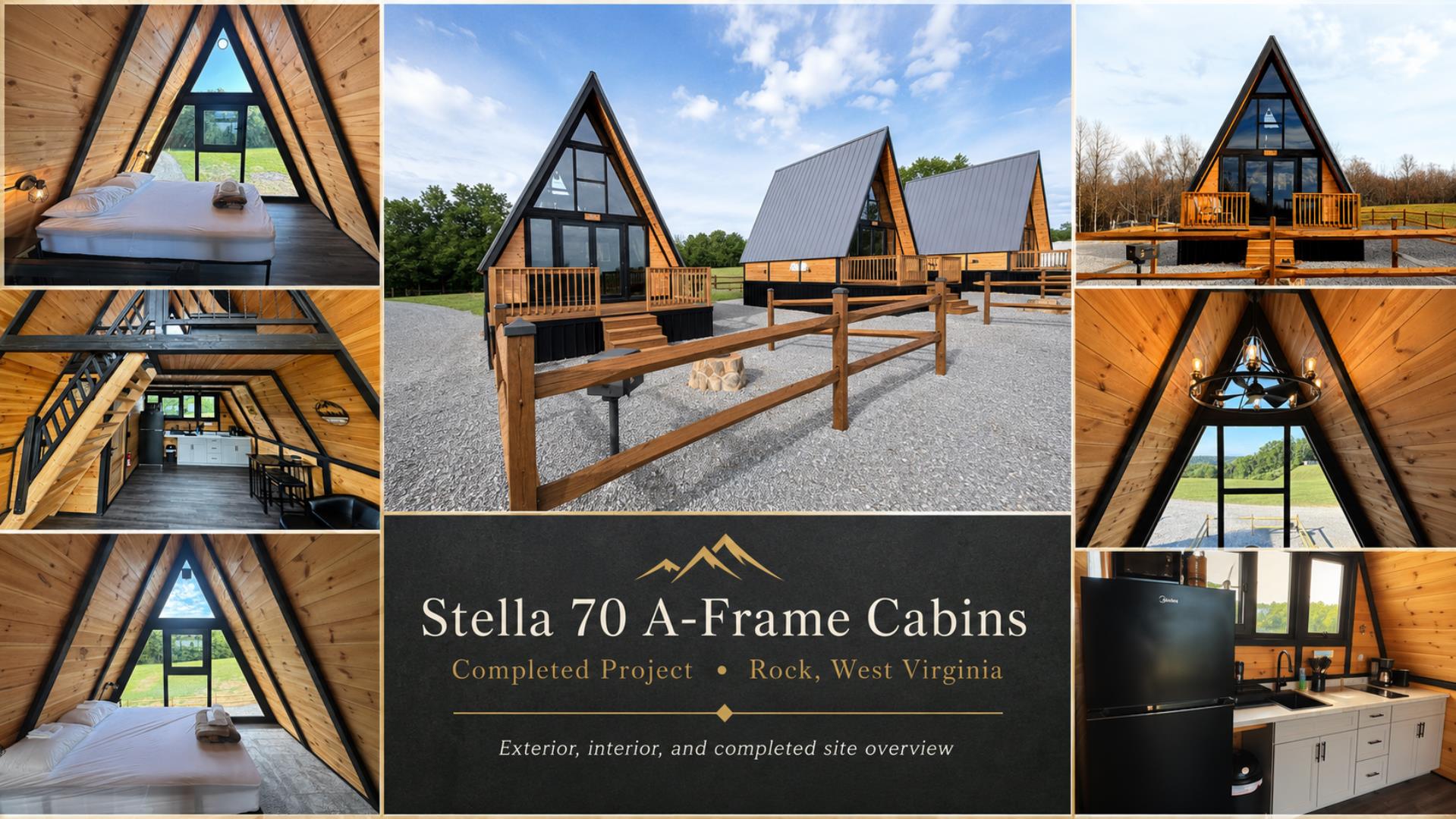
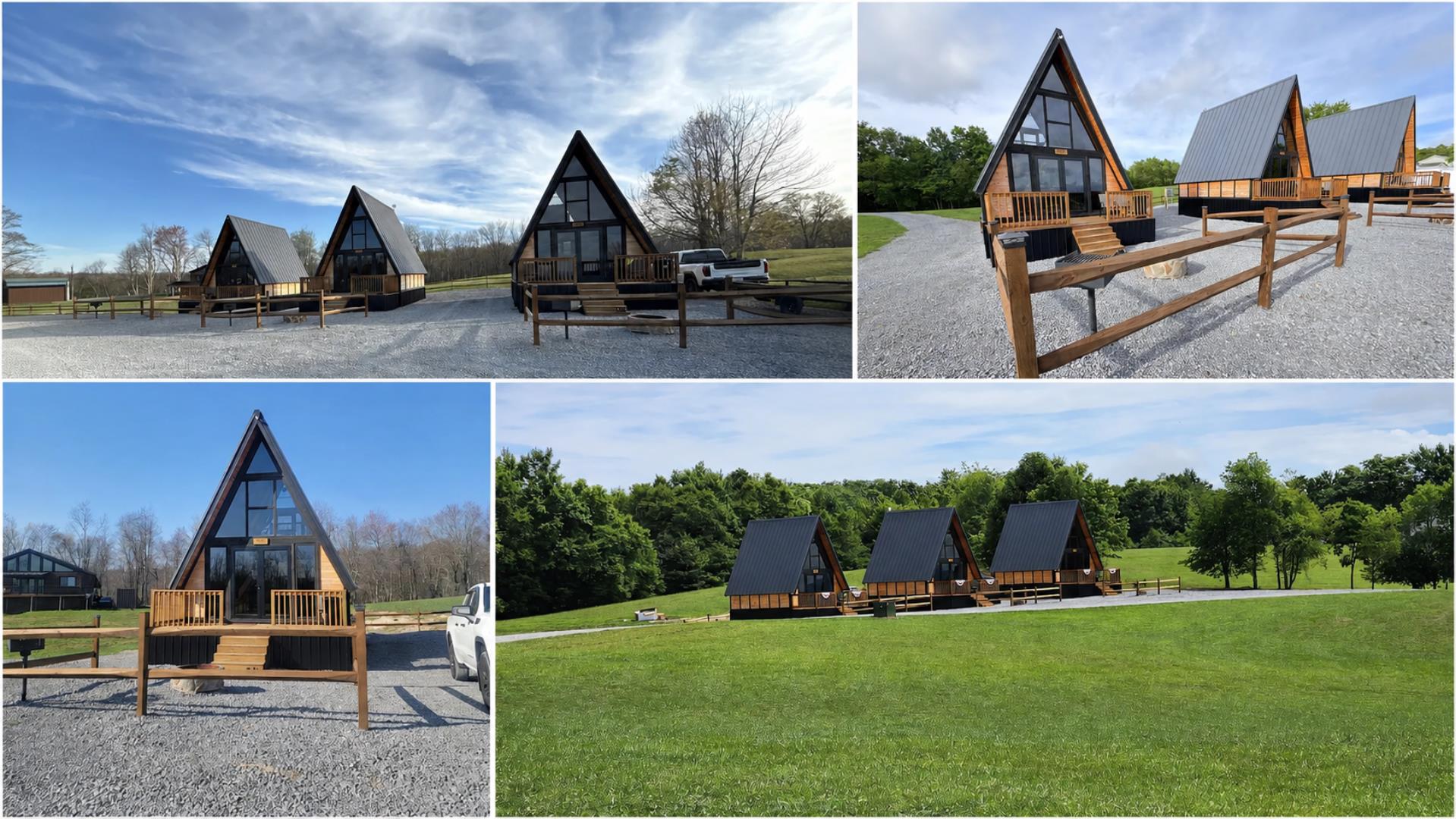
The project included three Stella 70 A-frame cabin kits for a short-term rental cabin property in Rock, West Virginia.
For rental cabin owners, the goal is usually not only to build a cabin. The goal is to create a place that photographs well, feels different from a standard small house, and can be built within a realistic project budget.
That is where an A-frame cabin kit can be useful.
The structural logic, roof geometry, main timber elements, exterior shell, glass package, and hardware are prepared as part of the kit. The local side still handles site-specific work such as foundation, utilities, interior completion, decks, and final rental preparation.
In West Virginia, this helped the customer move from delivery to rental use in a short period.
Order, Production, and Container Loading
After Rick selected the Stella 70 for his West Virginia rental cabin project, the sales agreement was signed on November 27, 2023.
The order included three Stella 70 A-frame cabin kits with the standard cabin kit package, glass, and hardware.
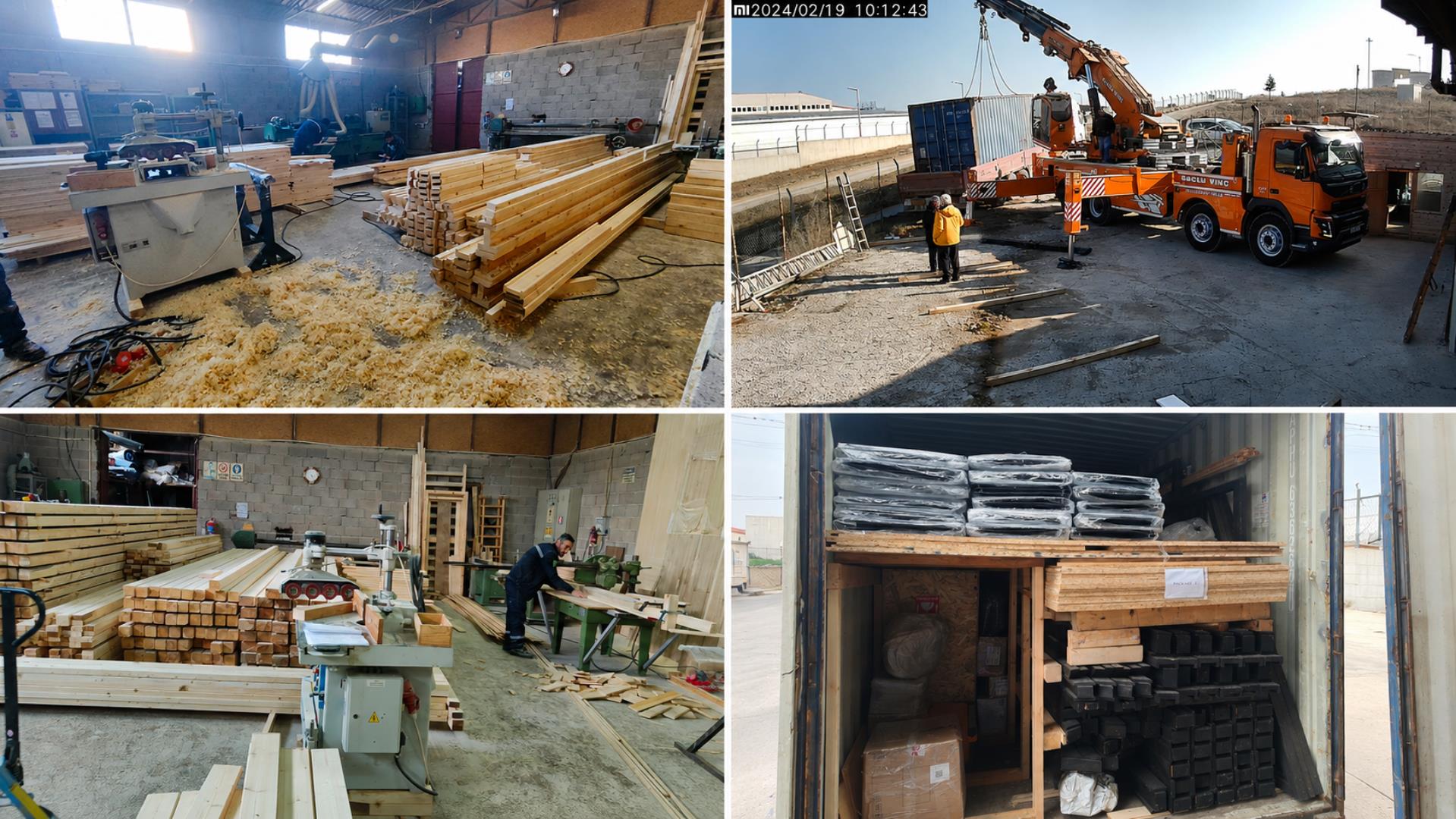
From that point, the project moved into factory production. The timber components, roof elements, exterior parts, glass package, and hardware were prepared as a coordinated prefab cabin kit shipment rather than separate loose materials.
This stage is important because a successful cabin kit project depends heavily on what happens before the container leaves the factory. The parts need to be produced, checked, grouped, packed, and loaded in a way that supports the later assembly sequence on site.
The container was loaded in Türkiye for the West Virginia shipment on February 19, 2024.
The production and loading photos from this project show one of the main differences between a simple material shipment and a factory-prepared prefab cabin kit: the work starts long before the kit reaches the job site.
SOC Container Delivery to West Virginia
One of the biggest improvements in the West Virginia project was logistics.
For this shipment, we used a shipper-owned container, commonly called an SOC container. Compared with transloading or open-top container freight, SOC delivery reduced handling risk because the materials stayed inside the same container for the main freight process.
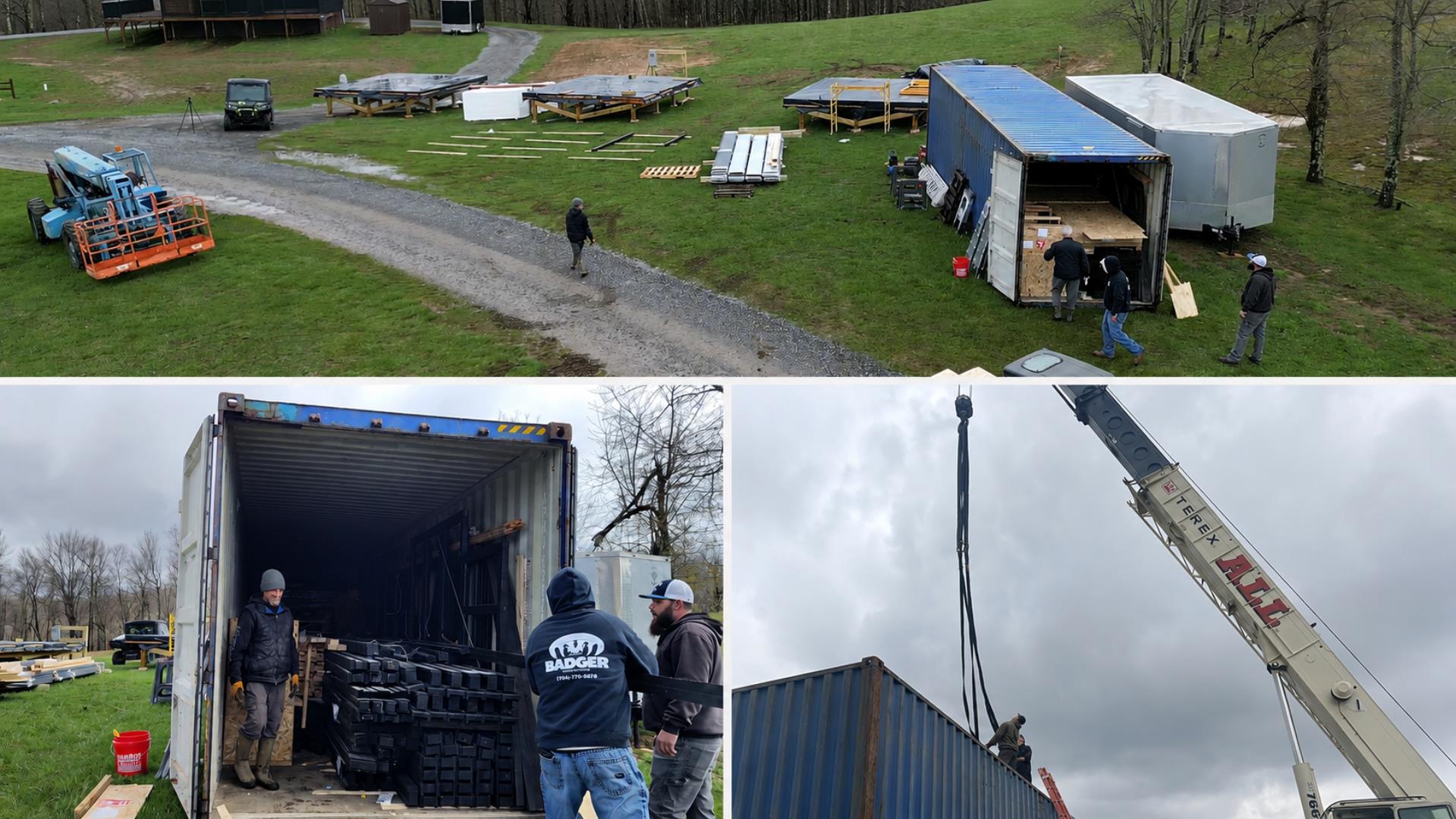
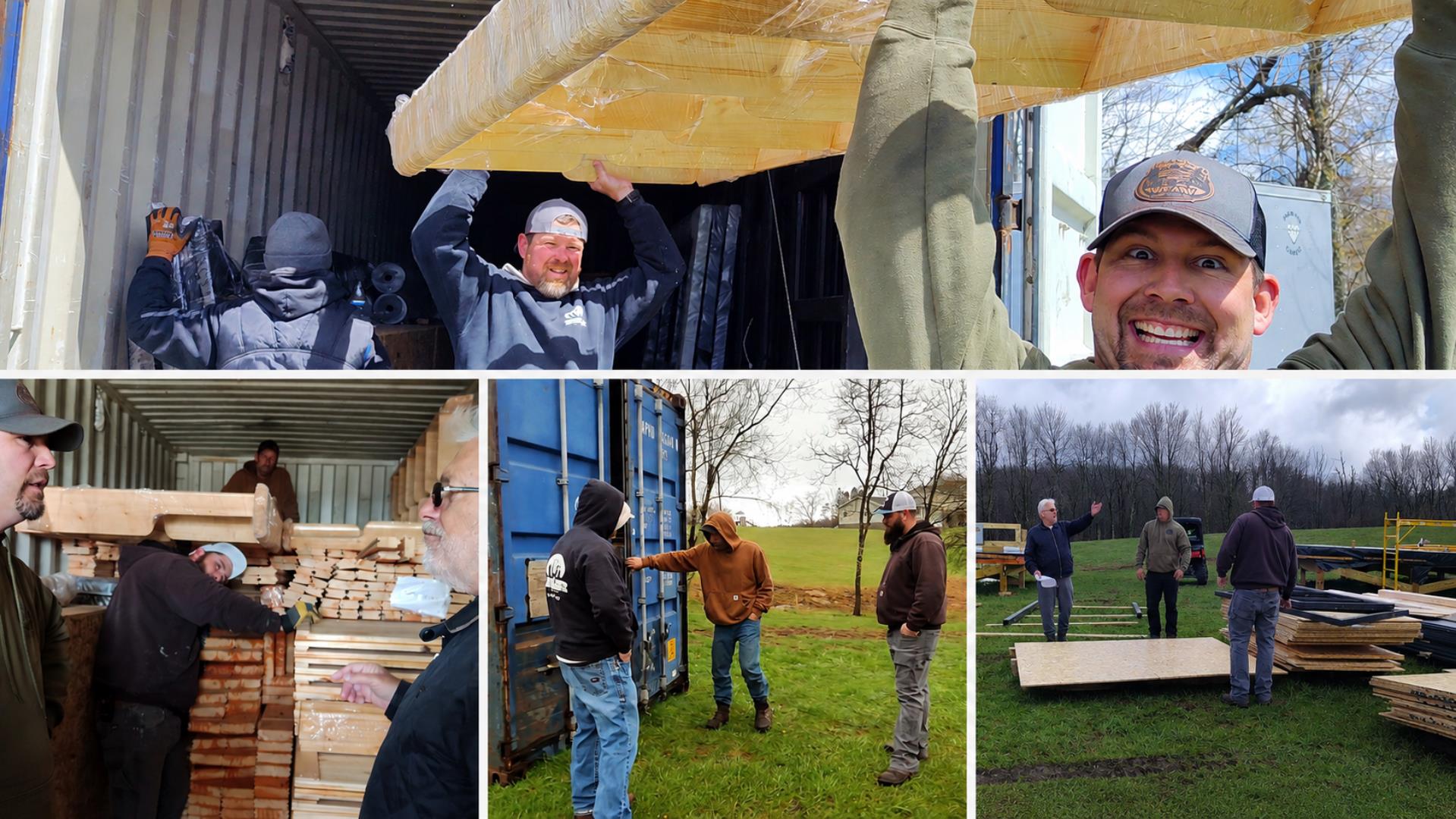
Rick unloaded the SOC container on site in Rock, West Virginia on April 1, 2024.
The freight cost also came in about $3,000 lower than our original estimate, and we refunded that difference to the customer. But the project also taught us an important site-delivery detail.
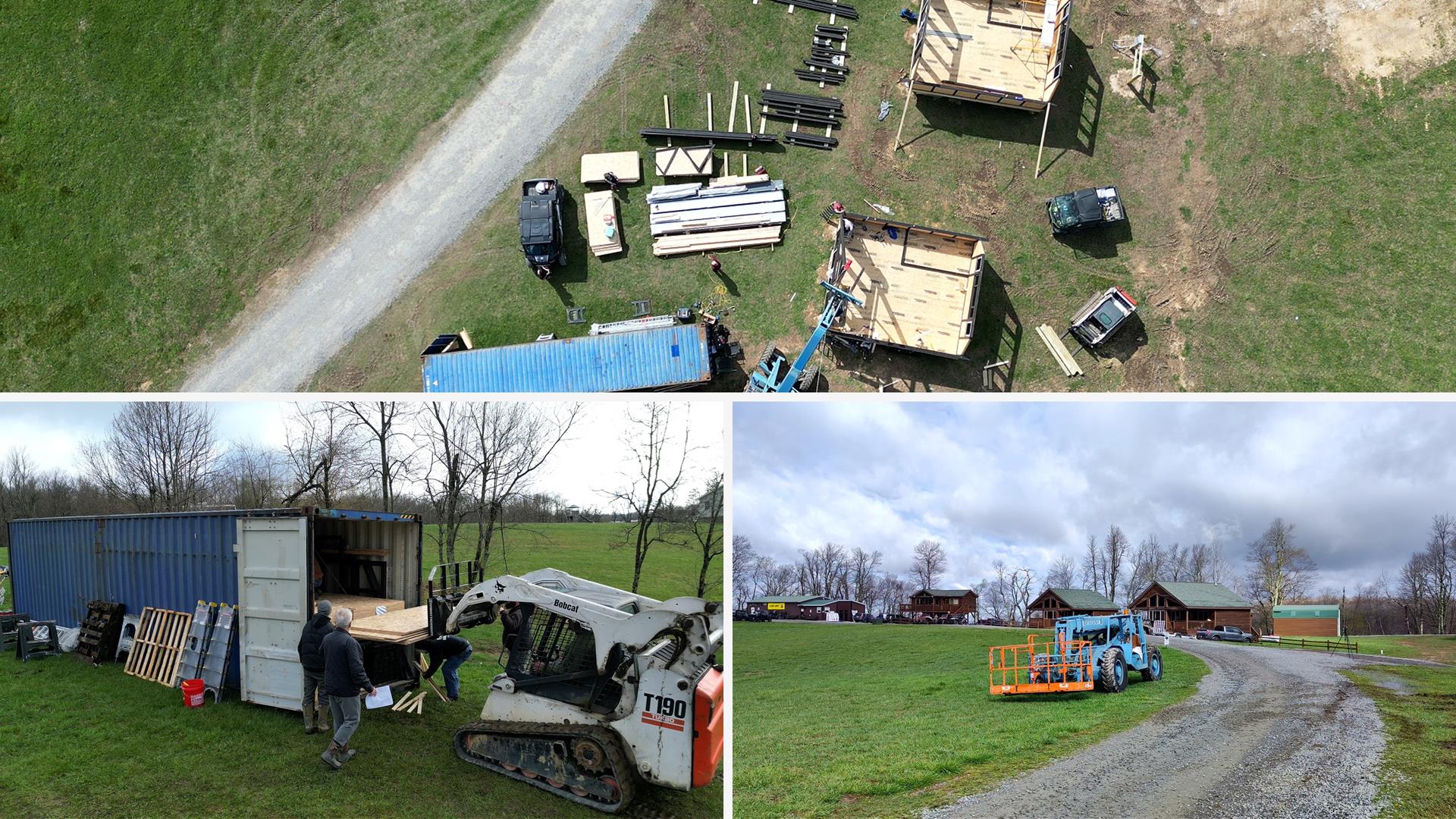
A fully loaded 40’ HC container for this type of cabin kit shipment can be around 48,000 lbs. Taking that container off the semi-truck requires the right container unloading equipment, crane service, or suitable local solution.
Depending on the project location, this can be a low-cost operation or a surprisingly expensive one. In West Virginia, part of the freight saving was later absorbed by the local container unloading cost.
The lesson was clear: SOC container delivery can reduce risk and cost, but the container unloading plan must be confirmed before delivery.
Container Placement and Site Staging
The SOC container became useful even after delivery.
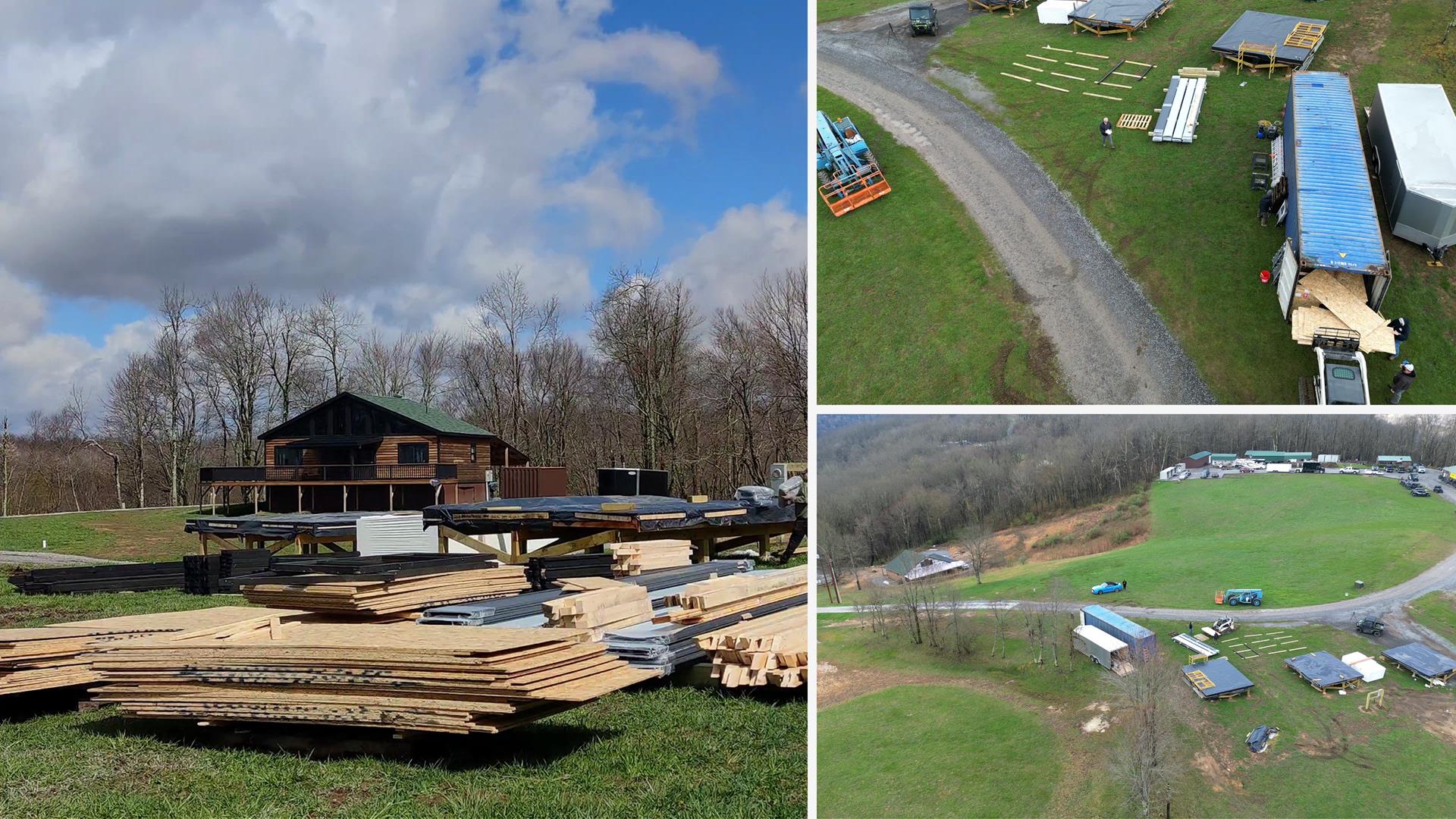
Because the container could be placed close to the assembly area, it worked as on-site storage during the build.
We did not need to unload everything at once. Instead, we unloaded the parts needed to keep the assembly moving and left later-stage materials inside the container until they were needed.
That helped the site stay more organized.
It also protected the materials during rainy days. When weather interrupted the work, the container gave us a dry and secure place to keep remaining cabin kit components.
For future A-frame cabin kit projects, this became another practical lesson: the container is not just a delivery method. If it can be placed close to the build area, it can become part of the site logistics plan.
Good container placement can improve assembly speed, reduce material handling, and protect the kit during bad weather.
Arriving at VW ATV Resort
Our team arrived at VW ATV Resort in Rock, West Virginia on April 12, 2024.
The assembly started the next morning, on April 13.
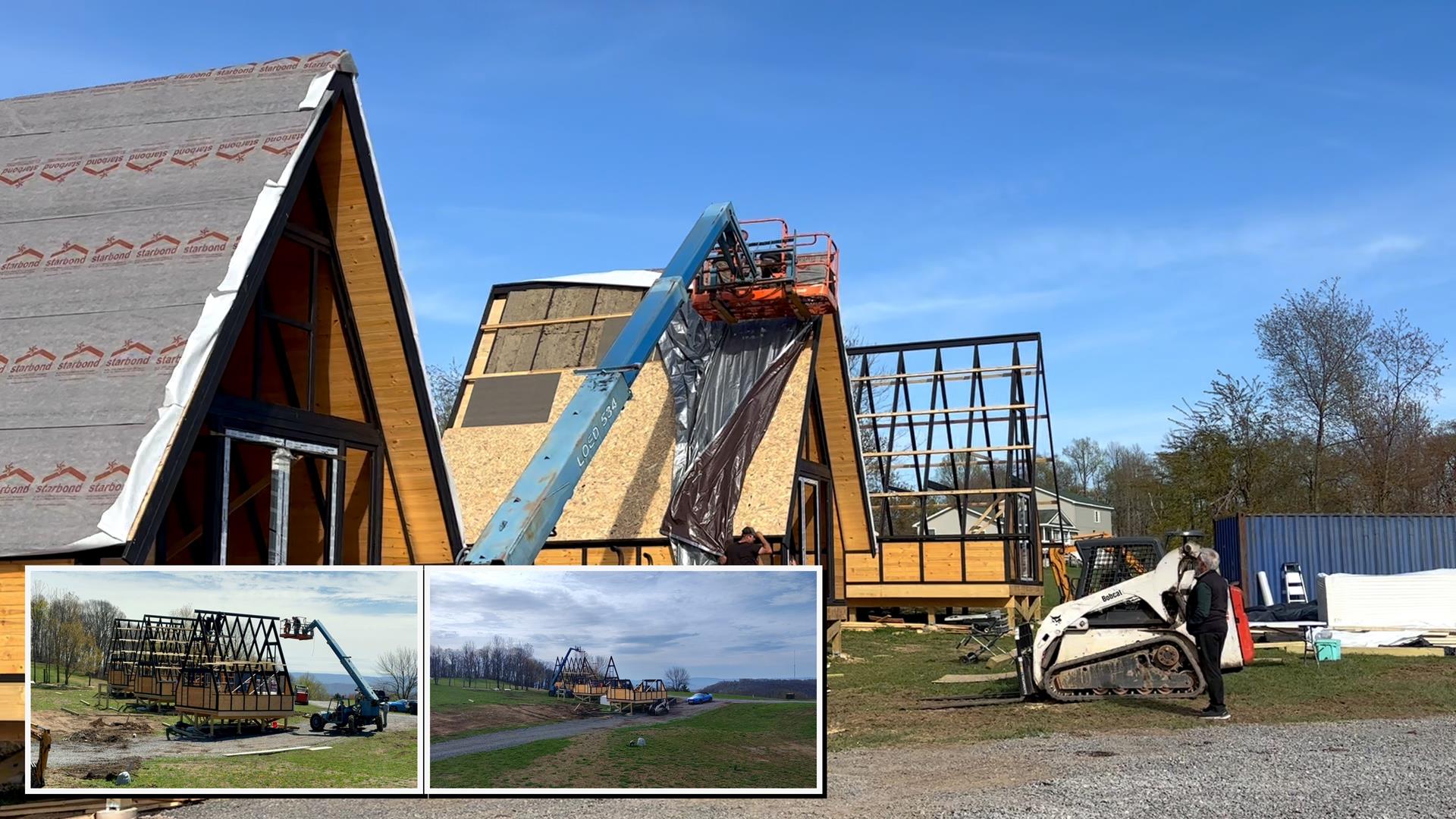
Compared with our first U.S. cabin kit assembly experience, the West Virginia site was much more prepared. It was still a real construction site, with normal limitations, but it was clearly planned as a build area.
This made a major difference.
The container was already on site. The materials were close to the assembly area. The customer had previous construction experience, and their own team was ready to work with us.
For a multi-unit A-frame cabin kit project, this kind of preparation matters. The cabin kit reduces cutting, measuring, and field decisions, but the site still needs access, staging, equipment, and a practical work plan.
A More Prepared Site and Owner-Led Crew
The West Virginia site was much more workable than our first U.S. assembly experience.
It was still a real construction site, not a perfect demonstration area. The customer’s team had other work happening at the same time, and labor was not unlimited. But the site had one major advantage: it was planned as a build area.
The customer also had previous construction experience. That mattered.
A prefab cabin kit reduces cutting, measuring, and field decision-making, but it does not remove the need for basic construction organization. Materials need to be staged correctly. Equipment needs to be available. The crew needs to understand the assembly sequence.
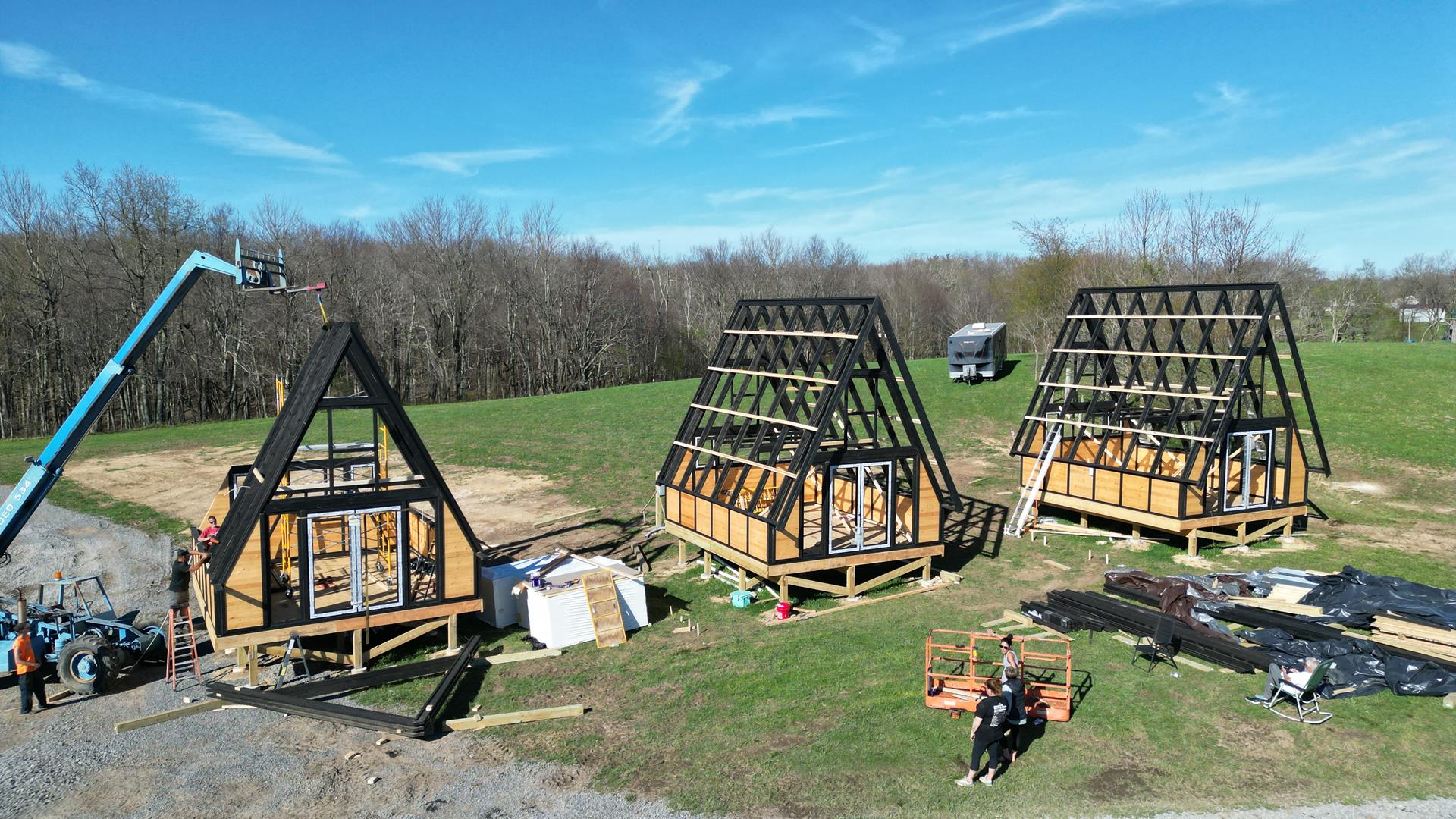
In this project, the customer’s old telehandler helped a lot. Even though it was not new equipment, it allowed the team to lift, move, and position parts much more efficiently.
Smart Standing Seam Metal Roofing
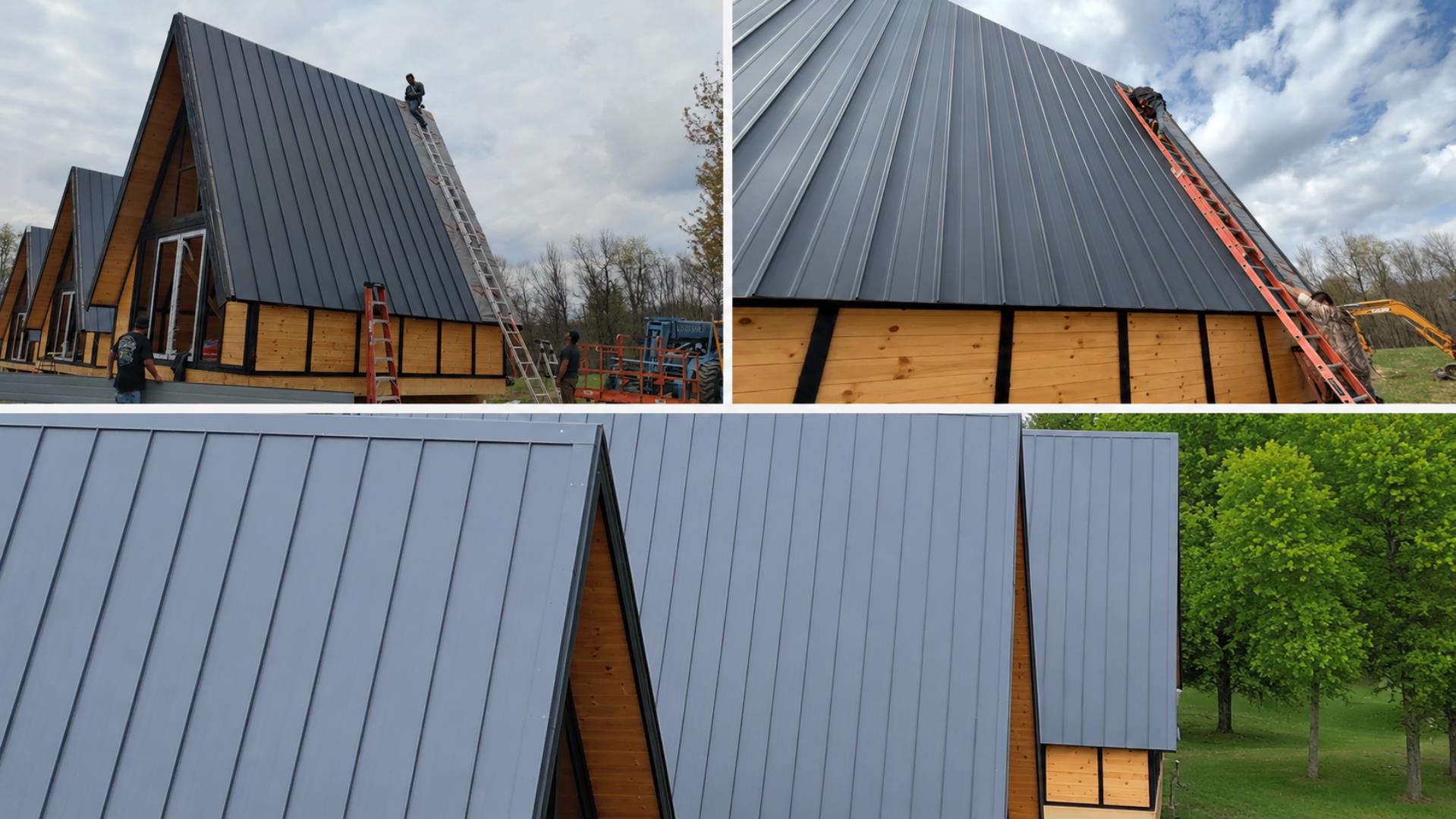
West Virginia was also an important project for our smart standing seam lock roof system.
For an A-frame cabin, the roof is not just a roof. It is one of the largest visible surfaces of the building and one of the most important parts of the exterior envelope.
The roof has to be durable, clean-looking, and efficient to install. It also has to work well for repeated cabin kit assembly, especially when local crews are new to the system.
In this project, the smart standing seam lock roof approach worked very well.
It helped the roof assembly move quickly and gave the cabins a clean exterior finish. After West Virginia, this roofing system became an important reference point for later U.S. A-frame cabin kit projects.
What Was Completed in 15 Working Days
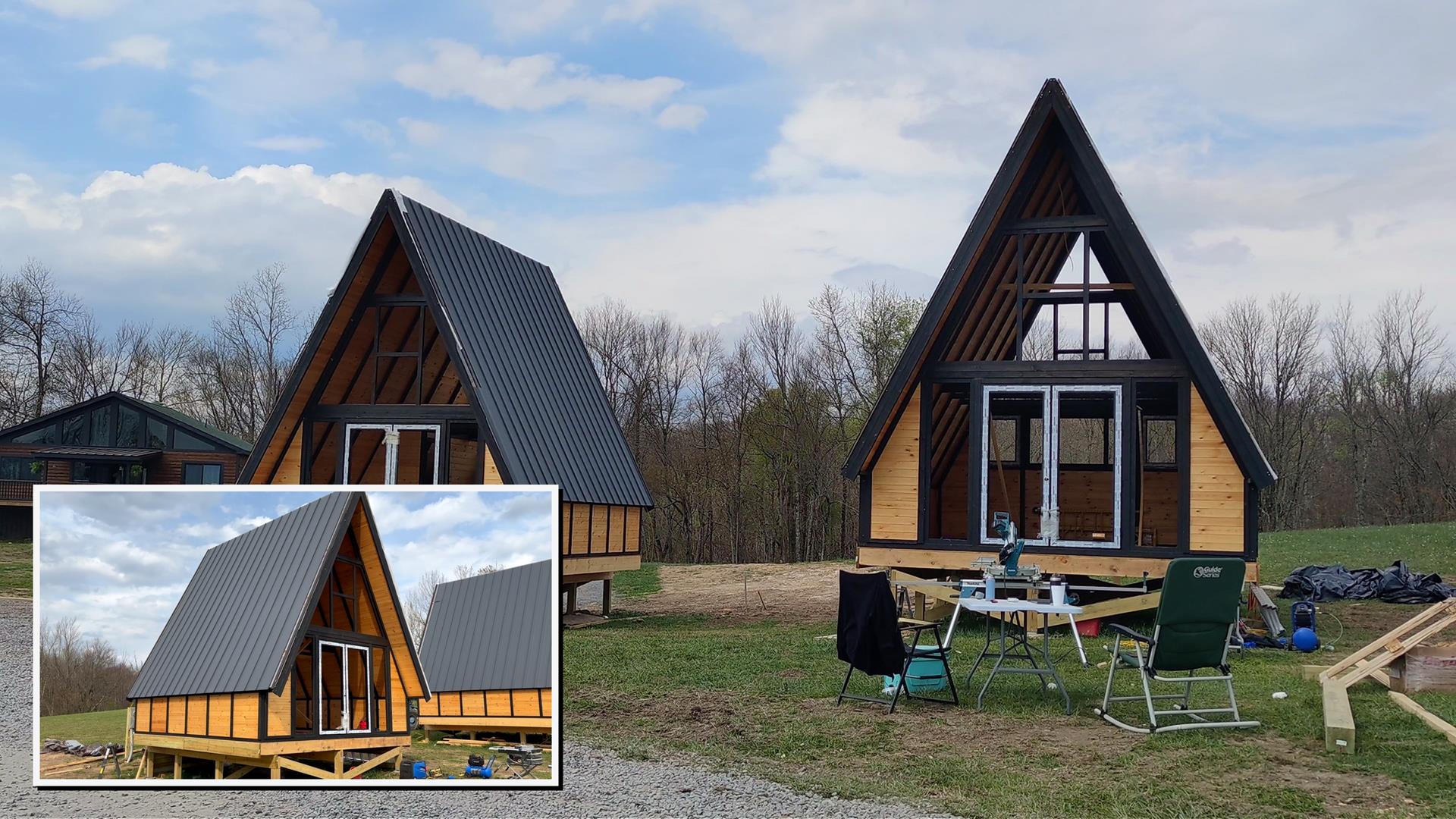
Our team stayed on site for 15 working days.
During that period, all three Stella 70 cabin frames were assembled. The roof systems were completed. Almost all exterior shell work was finished, except for the glass installation.
Two weeks later, when we visited the site again, the glass was being installed and the interior work had started.
Around 30 days after our assembly support ended, the cabins were ready for rental use.
This was a strong result for a U.S. prefab cabin kit project.
It showed that when the site is prepared, equipment is available, and the local team stays involved, multiple A-frame cabin kits can move from delivery to usable rental cabins in a short time.
Weather and Real Site Conditions
The West Virginia project went very well, but it was still real construction.
The weather was generally workable, but rain affected the schedule. We lost at least two full working days, and another two or three days were partly affected by rain.
This did not stop the project, but it reminded us that even fast cabin kit assembly needs weather allowance.
We also learned another practical point: Saturday work should not be assumed.
In some places, and with some local teams, the work week ends when it ends. That has to be reflected in the schedule. A 15-working-day assembly period is not the same thing as 15 calendar days.
These were not major problems. They were normal field lessons.
West Virginia confirmed that even a smooth A-frame cabin kit project still has to respect weather, labor rhythm, equipment availability, and local working habits.
Working With Rick’s Team and Customer Interview
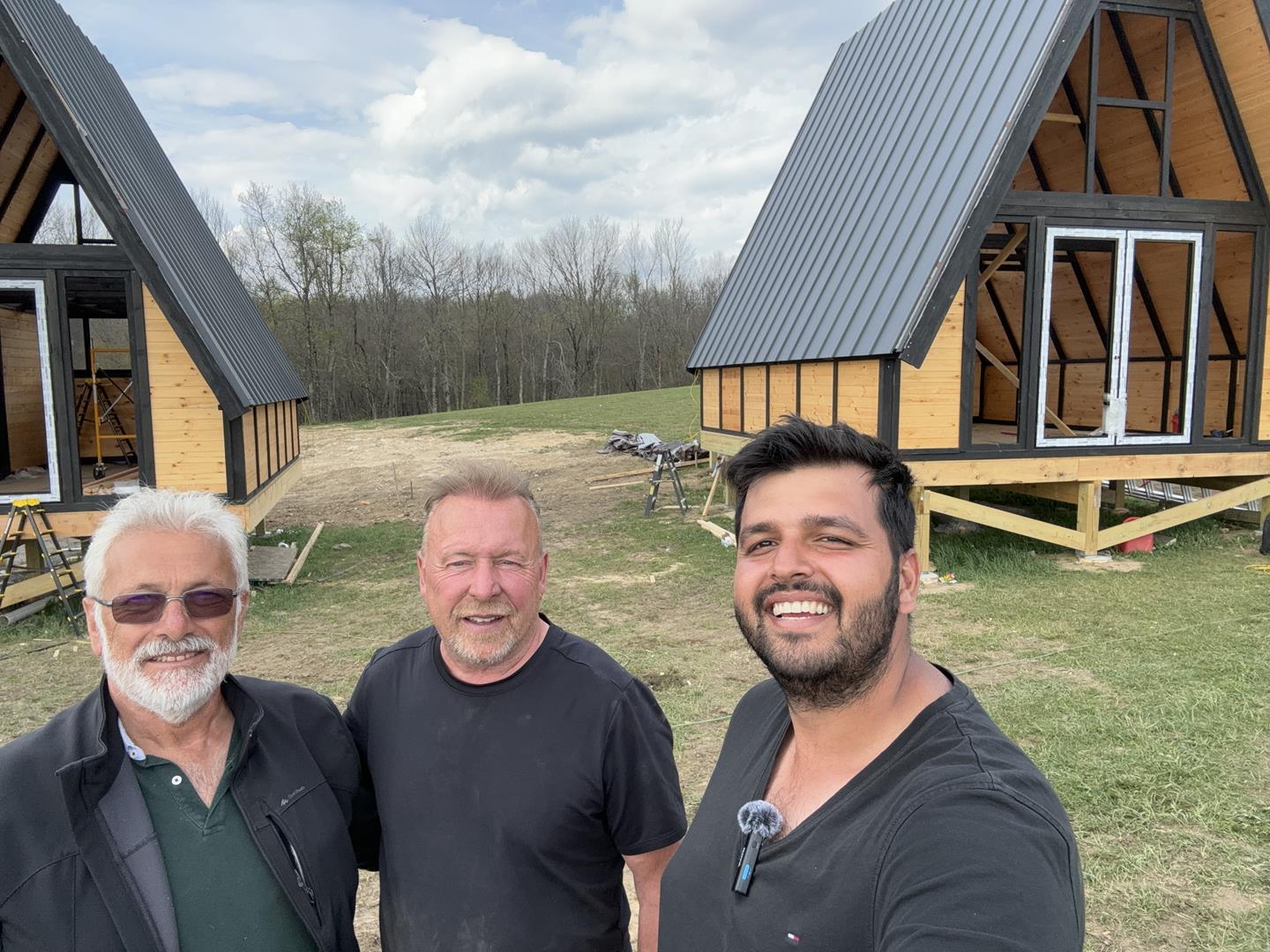
This project was also different because Rick’s own team handled the assembly instead of hiring a separate contractor crew.
That created some limits, because the team also had other responsibilities on the property. But it also created a practical and positive working environment.
The team was hands-on, motivated, and interested in the system. As the Stella 70 cabins went up, they were clearly impressed by the speed of the assembly.
Rick was also a very good host. During lunch breaks, he prepared barbecue for everyone, which became part of the rhythm of the project.
After the cabins were assembled and prepared for rental use, Rick also shared his experience in a customer interview.
His interview became a useful customer perspective on what it is like to build a Solidcabin A-frame cabin kit in the United States.
You can watch the customer review on YouTube
A Cabin Project in the Middle of Nature
The location was one of the best parts of the project.
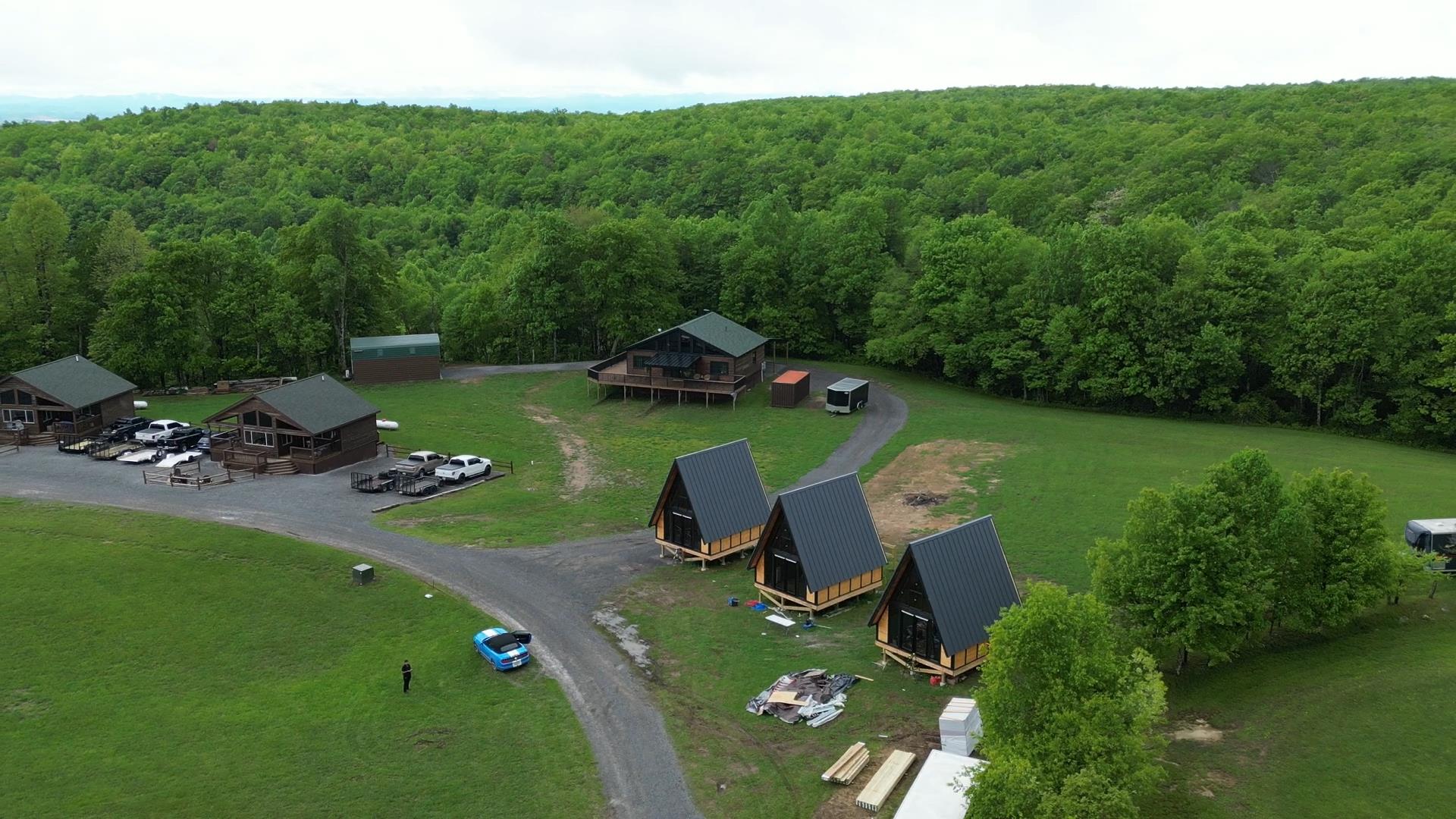
The property was surrounded by nature. During breaks, the site sometimes felt less like a normal construction area and more like working inside a wildlife scene.
At one point, we thought we saw a cat near the yard, then realized it was a bobcat. Eagles were flying above us, and at times they came close enough to the drone to make filming more interesting than expected.
It was also one of the first remote U.S. cabin sites where we saw how useful Starlink could be.
With multiple cameras, drone footage, and site videos, we were able to send material back to our team in Türkiye almost in real time. That helped our production and support team follow the assembly process closely from the factory side.
For remote cabin kit projects, that kind of communication matters. Good site feedback helps the support team understand the work, answer questions faster, and improve future projects.
Guest Feedback After the Cabins Opened
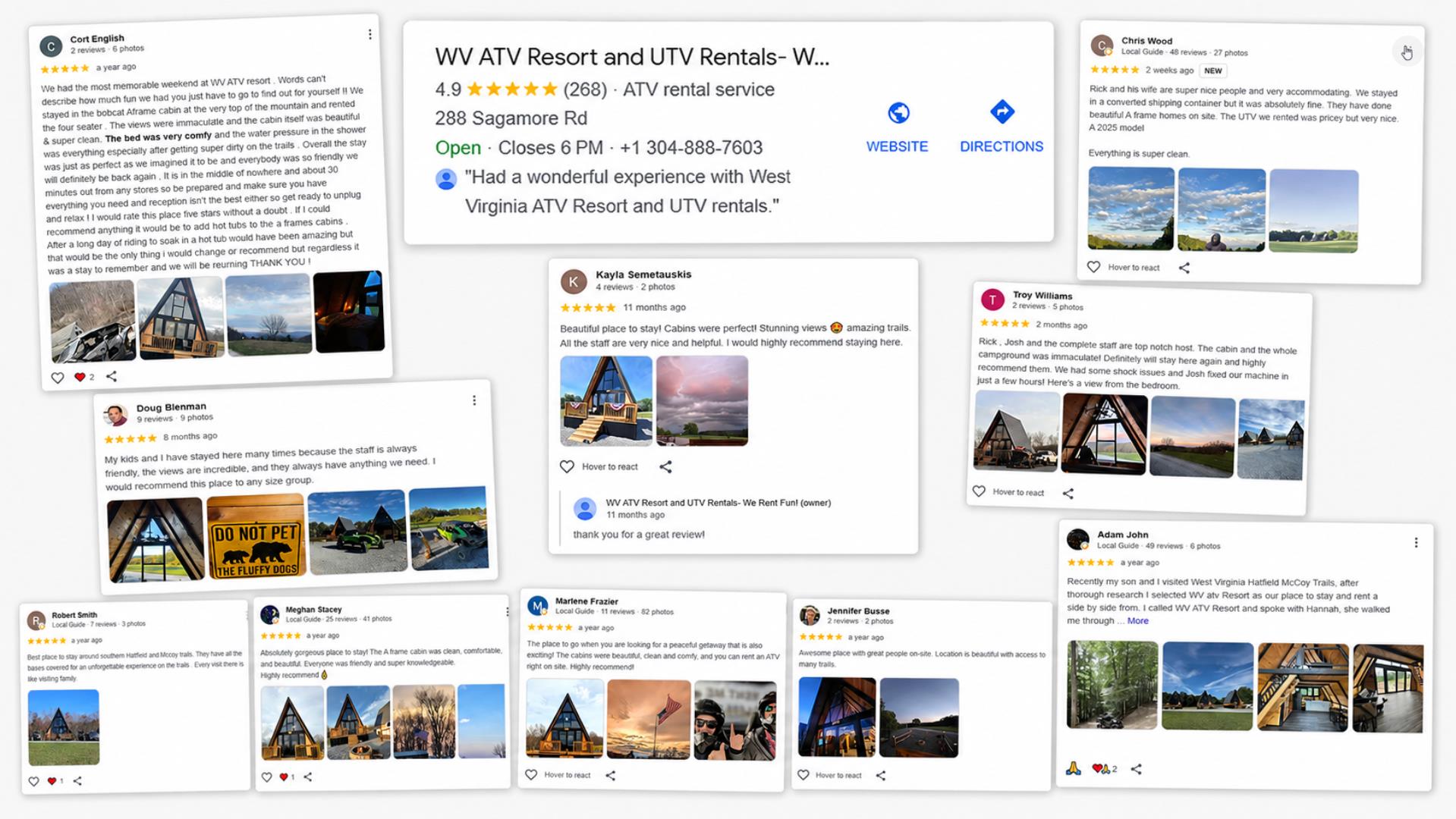
VW ATV Resort already had a strong guest reputation before this project. This was not a new or untested rental operation. They understood hospitality, guest experience, and how to run a successful short-term rental property.
For us, the important part was seeing how the Stella 70 A-frame cabins performed inside that existing rental environment.
After the cabins opened for guest use, several Google reviews specifically mentioned the A-frame cabins. Guests described the cabins as beautiful, clean, comfortable, and well suited for a short getaway. One guest mentioned the view from the bed. Another described the Bobcat A-frame cabin as beautiful and super clean, with an impressive view, a comfortable bed, and good shower pressure. Another review described the A-frame cabin as clean, comfortable, and beautiful, and also mentioned the helpful staff.
We do not see these reviews as only a product comment. A good guest experience comes from the full operation: the location, the host, the service, the site, and the cabin itself.
But for a prefab cabin kit supplier, it was still an important confirmation.
The Stella 70 cabins were not only assembled and finished. They became part of a working West Virginia rental cabin property, and guests responded positively to them.
google reviews link
What West Virginia Proved
West Virginia proved that a multi-unit A-frame cabin kit project can move very quickly in the U.S. when the site is planned, the package arrives safely, suitable equipment is available, and the local team stays involved.
Three Stella 70 A-frame cabin kits reached a major core-shell stage in 15 working days. The SOC container approach reduced handling risk, the materials arrived without damage, and the smart standing seam lock roof system worked very well for the U.S. market.
Montana taught us what had to be improved.
West Virginia showed that those improvements worked.
After this project, we had more confidence in SOC container delivery, container placement as site storage, owner-led assembly, smart standing seam roofing, and the repeatability of our U.S. prefab cabin kit process.
This project became one of our cleanest early U.S. references: three Stella 70 A-frame cabin kits, delivered safely, assembled quickly, and opened for rental use shortly after.