Before Montana: From Videos to U.S. Interest
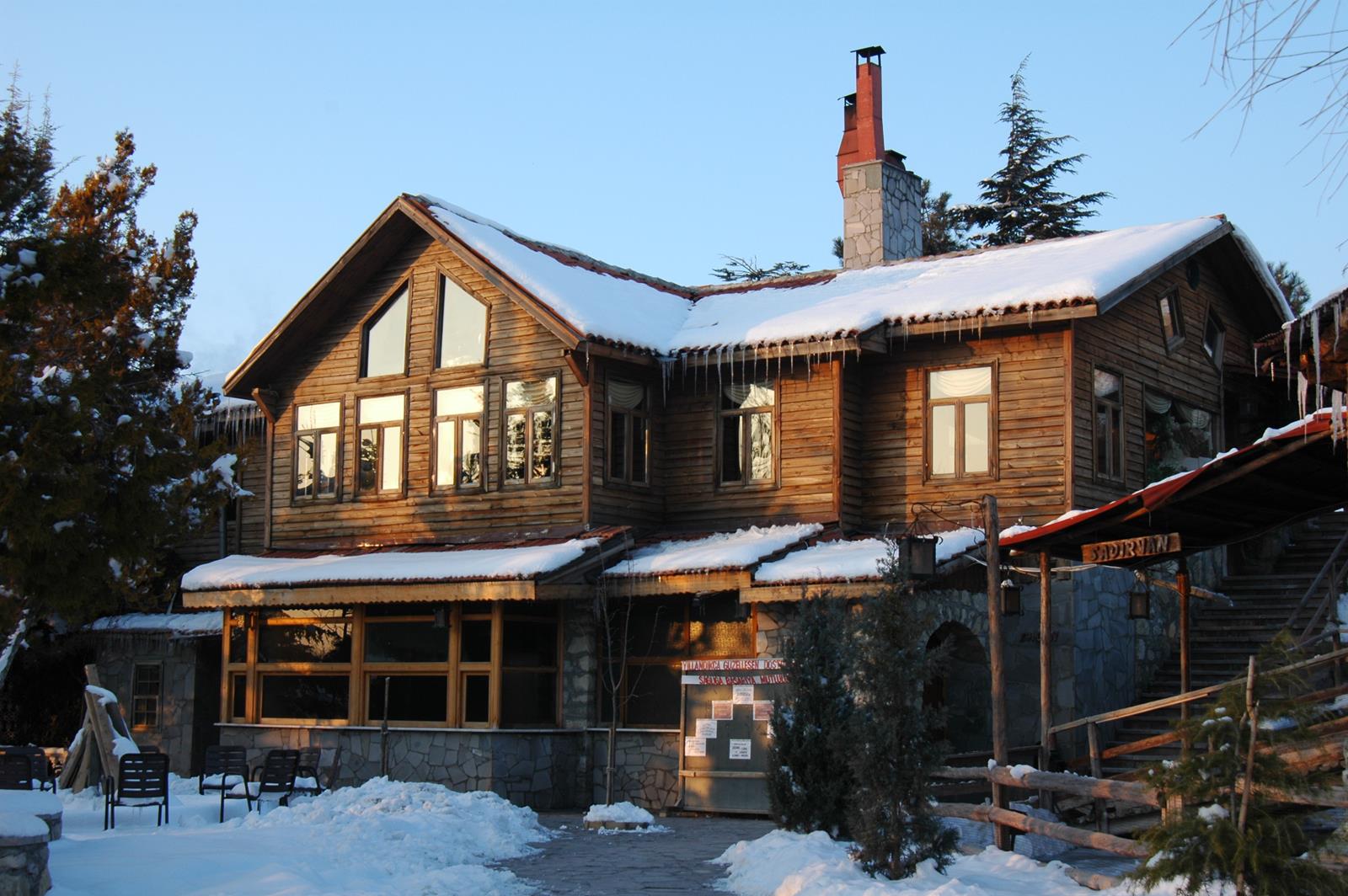
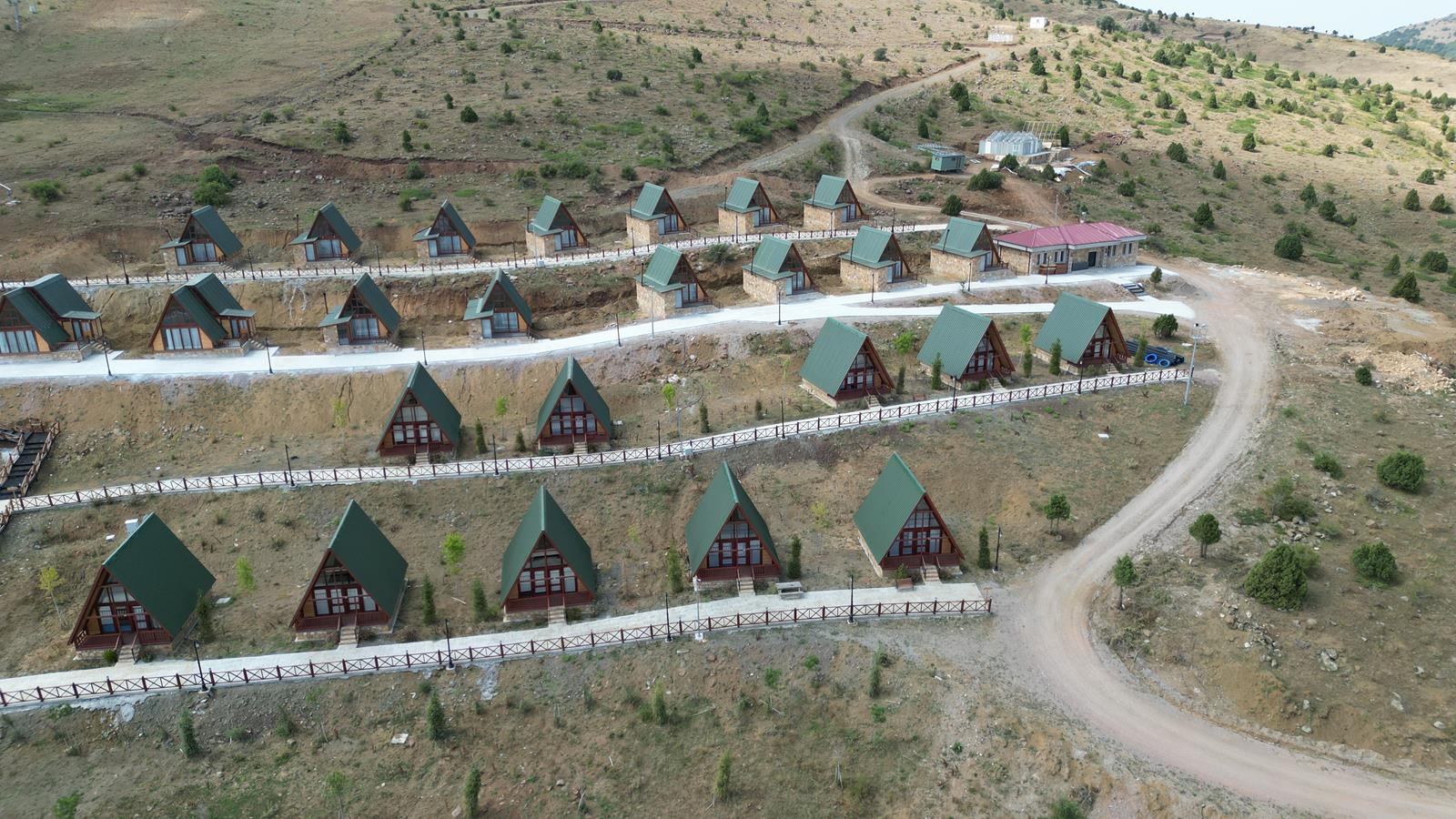
Before our first Montana delivery, we were not a new company testing a product for the first time. In Türkiye, MasifEv (SolidCabin) was already a known wooden building manufacturer, with more than 300 completed wooden house (at that time) , cabin, and resort-style projects.
What was new was the U.S. market.
Our Turkish construction videos had started receiving English comments and questions, and some of our build footage was licensed by foreign media outlets. That attention led us to publish more English content. The videos created serious interest, but we quickly learned that video attention was not the same as buying confidence.
Even when people watched a full A-frame cabin assembly, many still found it hard to believe that a cabin kit could be built that quickly.
Proving the A-Frame Cabin Kit Assembly Speed
Some of our strongest videos showed very fast construction under highly organized professional conditions. For us, those videos proved the efficiency of the system.
For some U.S. buyers, they created another question.
They looked at the same videos and thought: “This is impressive, but this is not my situation.”
That became an important lesson. A professional build can show what the system is capable of, but a private buyer or local contractor also wants to understand what happens under more ordinary conditions, with a smaller crew and a more limited site setup.
So when one American customer asked for the real assembly time, not the promotional version, we made a direct offer: come to Türkiye, and we will assemble the cabin in front of you.
January 2023: The Three-Day Stella 53 Demonstration
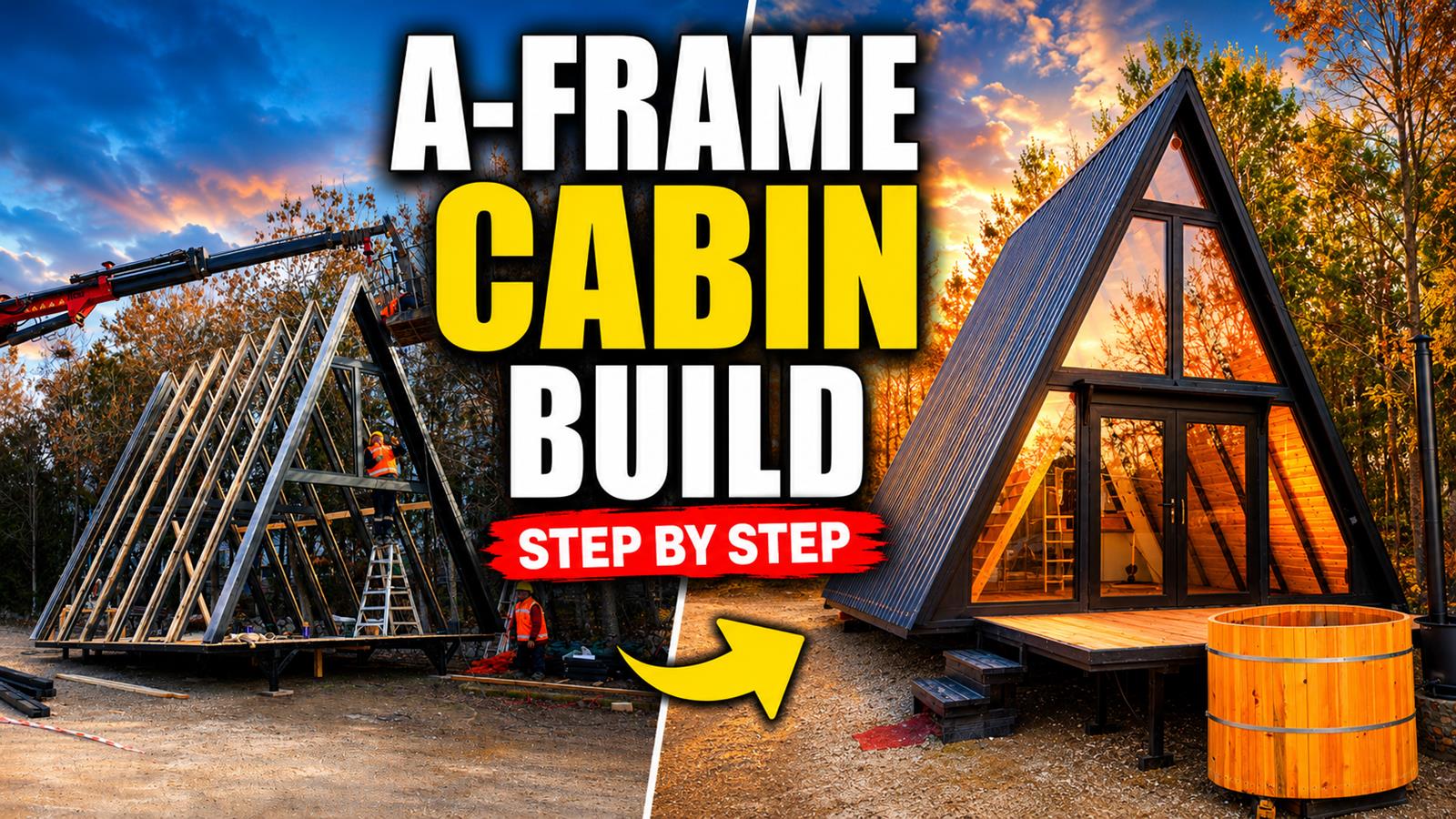
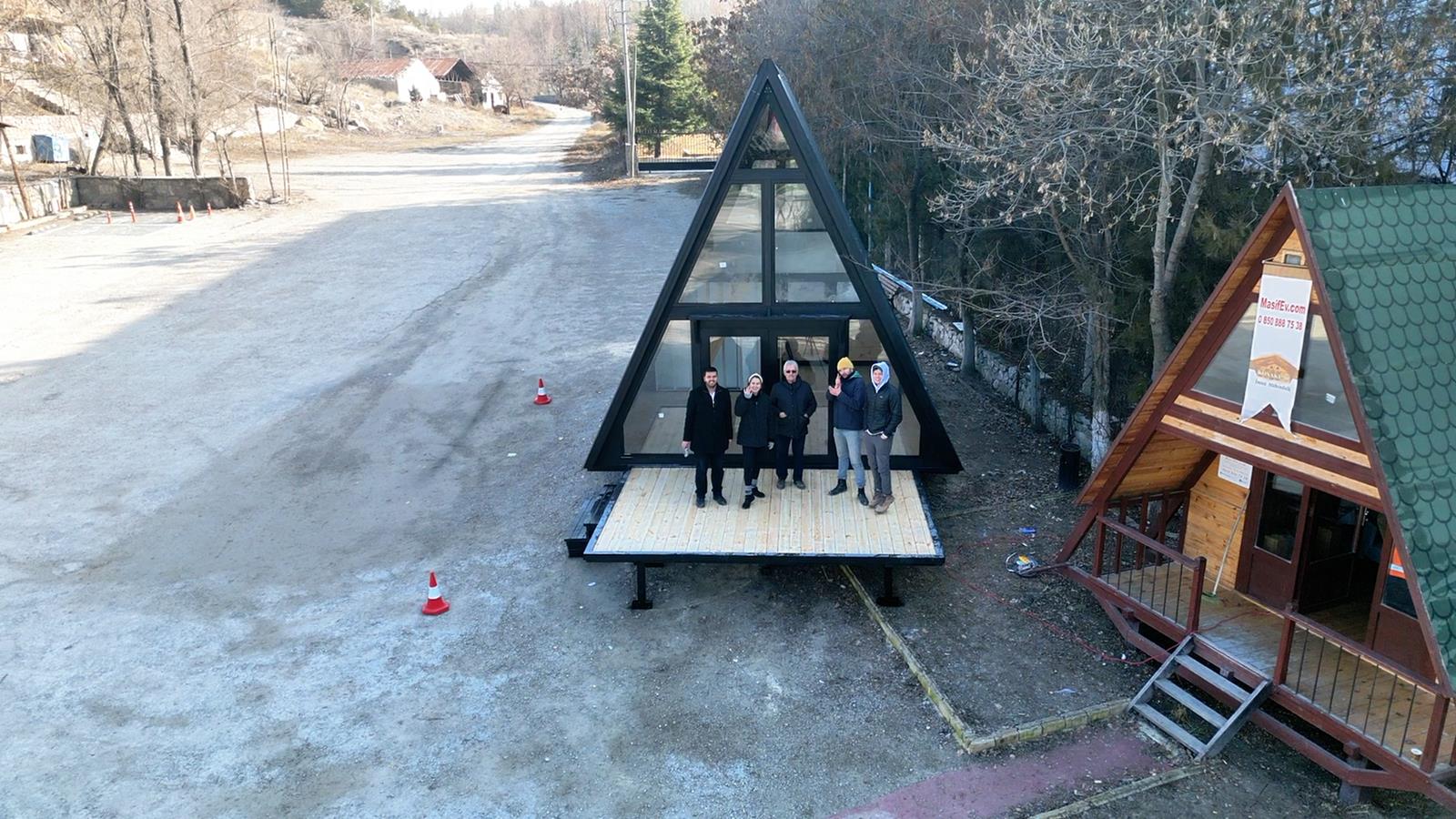
The customer came to Türkiye in January 2023 to see the Stella 53 A-frame cabin kit assembly in person.
The timeline was clear. They had only reserved four days for the visit, so if we were going to prove the assembly speed, we had to do it in front of them within that short window.
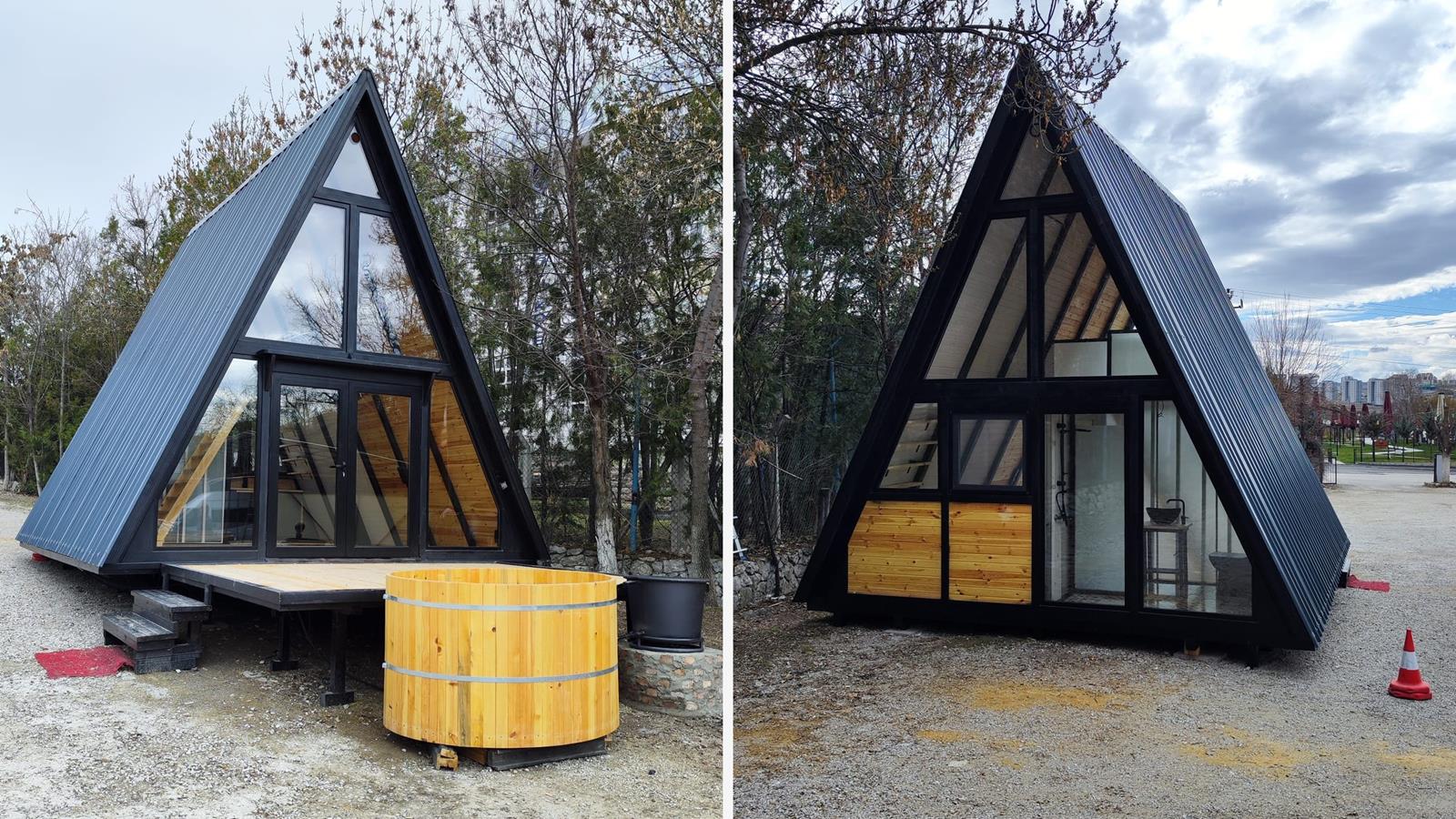
In three days, we assembled the main cabin structure, roof, insulation, glass, deck, and exterior kit components. It was not a fully finished house with utilities and interiors completed, but it showed the core promise of the system: the main structure and exterior shell could be assembled very quickly when the kit was prepared properly.
That demonstration video later became one of our most important references and has now been watched more than 1.5 million times.
Why Stella 53 Became the Montana Model
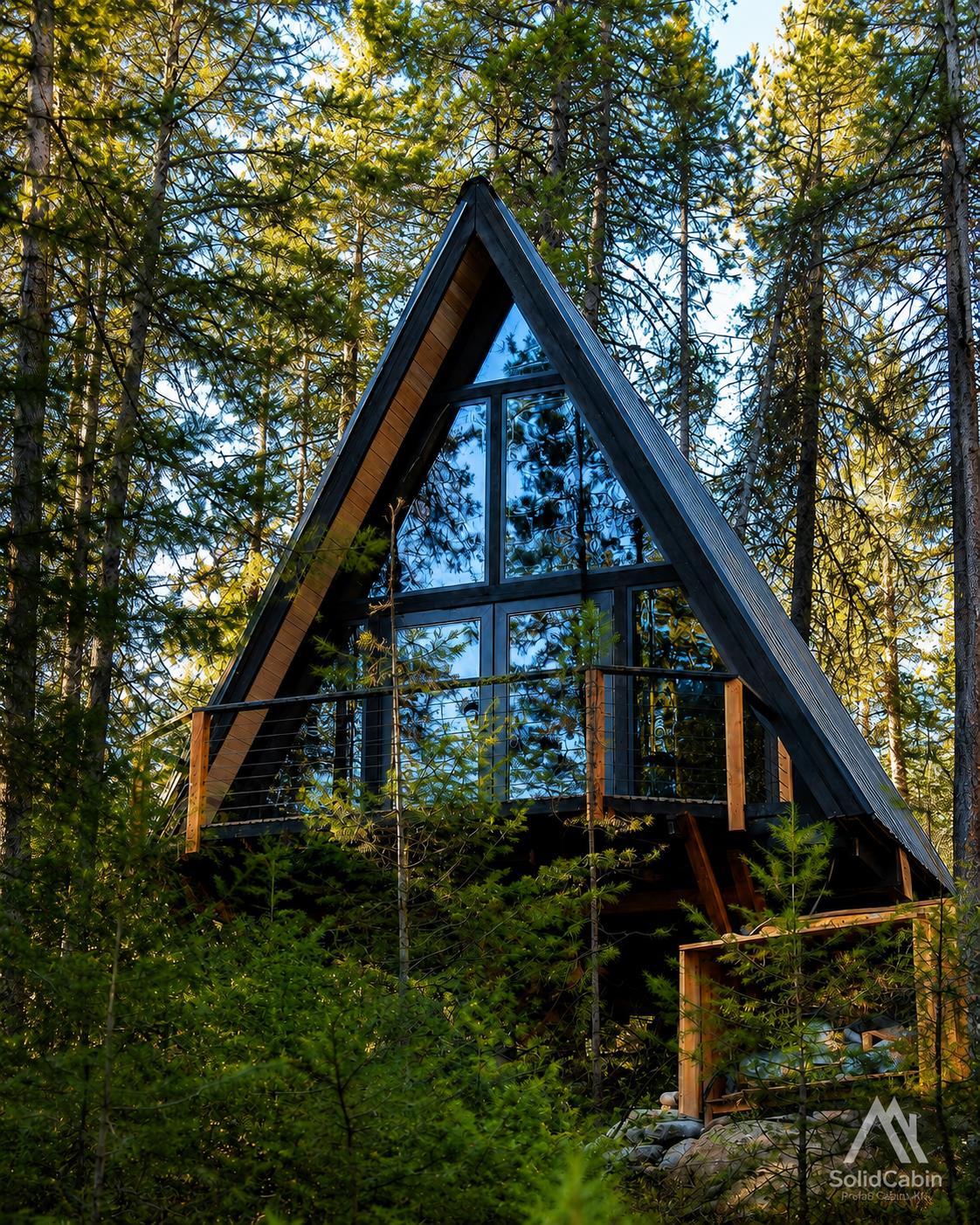
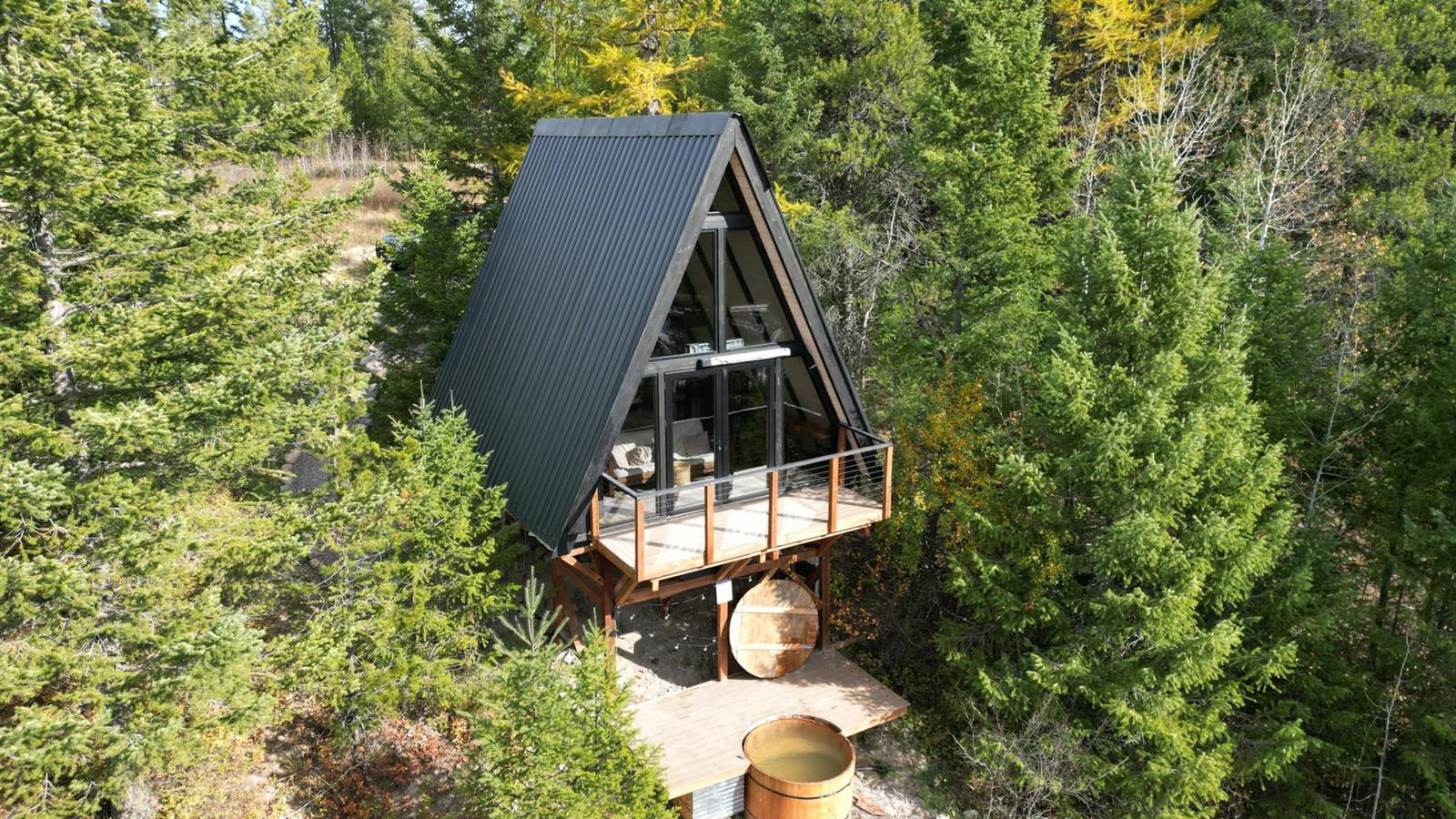
The A-frame cabin kit assembled during the visit was Stella 53.
Stella 53 was already part of our own compact A-frame development work, shaped around fast assembly, container efficiency, and strong visual appeal for short-term rental use. During discussions with the Montana customer, we reviewed a few practical preferences and use-case expectations. Some of these were incorporated where they made sense within our own design logic.
However, Stella 53 was not a customer-designed model. The structural system, assembly logic, proportions, kit content, and production decisions remained part of our own product development.
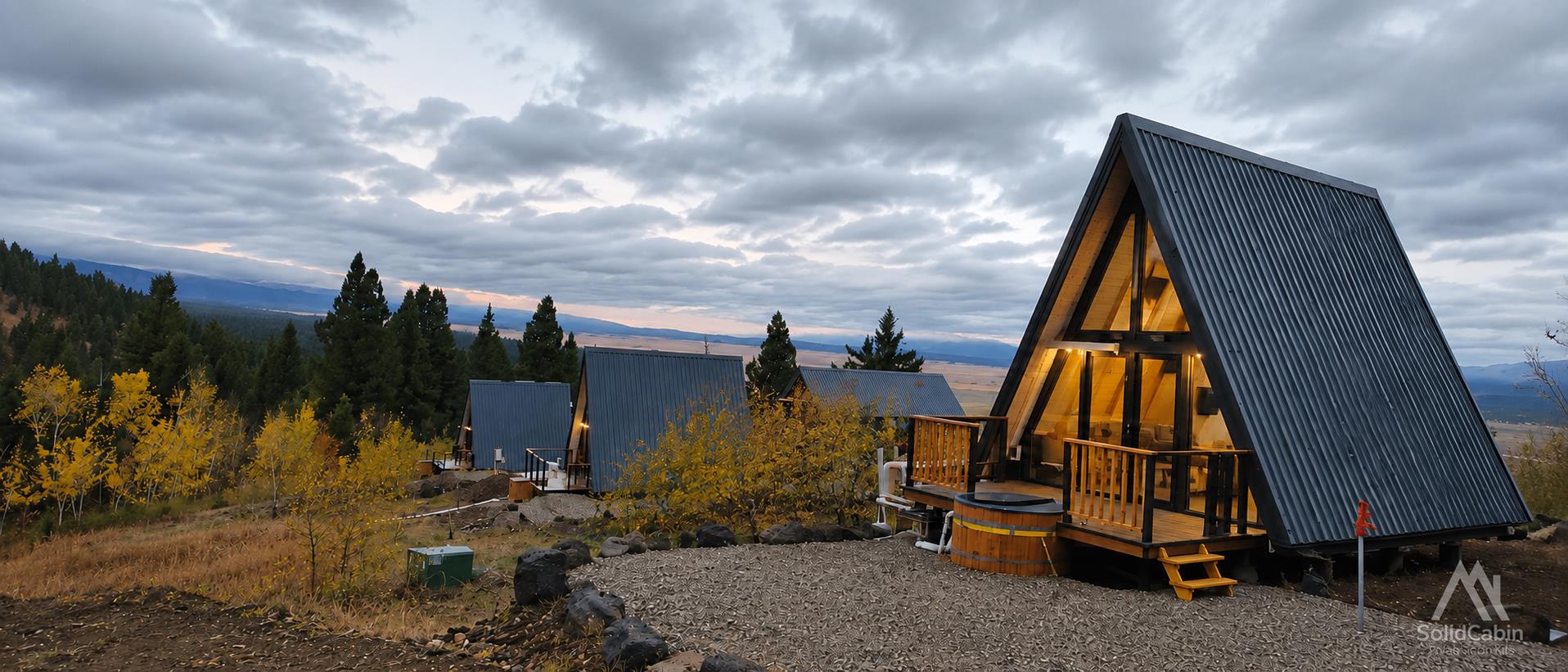
The Montana project simply became the first real U.S. application of the Stella 53 A-frame cabin kit.
Four Stella 53 Cabin Kits in One Container
After the customer returned to the U.S., they decided to move forward with the project.
We agreed on four Stella 53 cabin kits. This was not only a commercial order; it was also the most practical first export test for that model, because four units could fit into one 40’ HC container.
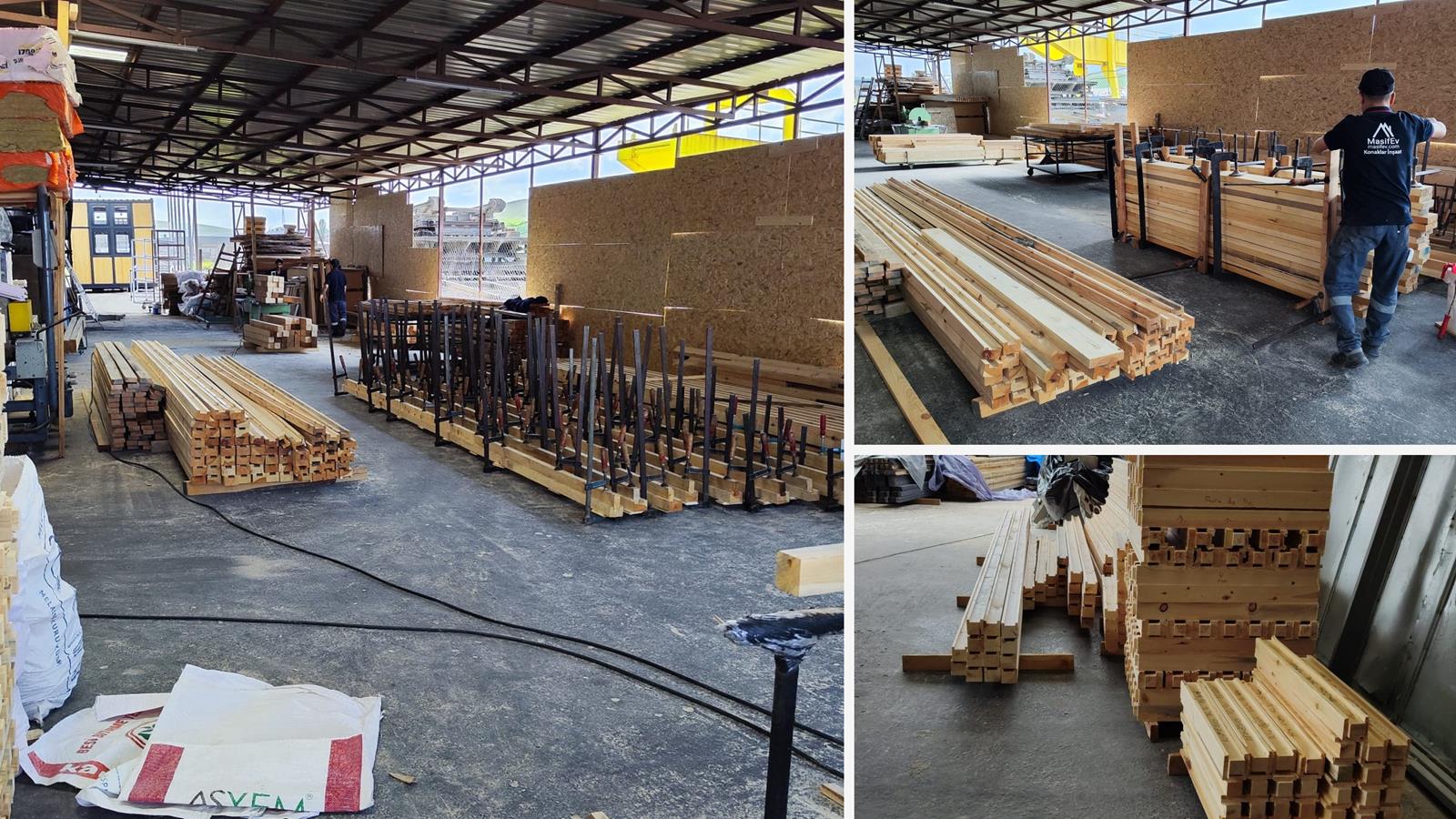
That container efficiency mattered. For international cabin kit projects, the product is not only designed for appearance and assembly. It also has to be designed around shipping volume, package size, loading method, and real delivery cost.
Montana was the first project where all of these questions moved from theory into a real U.S. shipment.
An Unexpected Delay After the Earthquake
Then an unexpected situation changed the timeline.
Türkiye was hit by a major earthquake, and exports of prefabricated structures were temporarily suspended because domestic emergency housing needs became the priority. The expected period was 90 days.
The customer asked for more details, and we explained the situation clearly. This was not a project-specific issue, but a national emergency measure that affected the industry.
As soon as the 90-day period ended, they contacted us again and asked whether the restriction had been lifted.
It had.
That was when they placed the order.
Before production, we checked the Montana location requirements, including insulation expectations and other details that could affect the cabin package for the U.S. market.
First U.S. Logistics Lessons
Montana was our first real U.S. freight experience for a cabin kit shipment.
Because the project had already been delayed, the customer wanted to move as quickly as possible once exports reopened. At that stage, we agreed on delivery through the Port of New York.
Looking back, this became one of our first major U.S. logistics lessons.
New York may be a common entry point for many shipments, but for a project site near Coram, Montana, the inland distance from the port was extremely long. Ocean freight was only one part of the shipment. The land transfer across the U.S. became a major part of the real logistics challenge.
After Montana, we paid much more attention to port choice based on the final project location, not only the first available ocean freight option.
Why Glass Became Part of the Kit
The Montana project also confirmed something important for the U.S. market: glass could not be treated as a simple local item.
In Türkiye, we were used to thinking of glass as something that could usually be supplied locally without much difficulty. During our early U.S. conversations, we realized that this assumption did not work well for the American market.
Custom glass could cost several times more locally, and sourcing the correct sizes, specifications, and delivery timing was not always simple for the customer or the local contractor.
Including the glass in the A-frame cabin kit reduced uncertainty for the buyer, protected the visual design of the cabin, and helped avoid a situation where the structure was ready but the project was waiting on expensive custom glazing.
Packaging for the Full Route
The Montana shipment changed the way we thought about packaging.
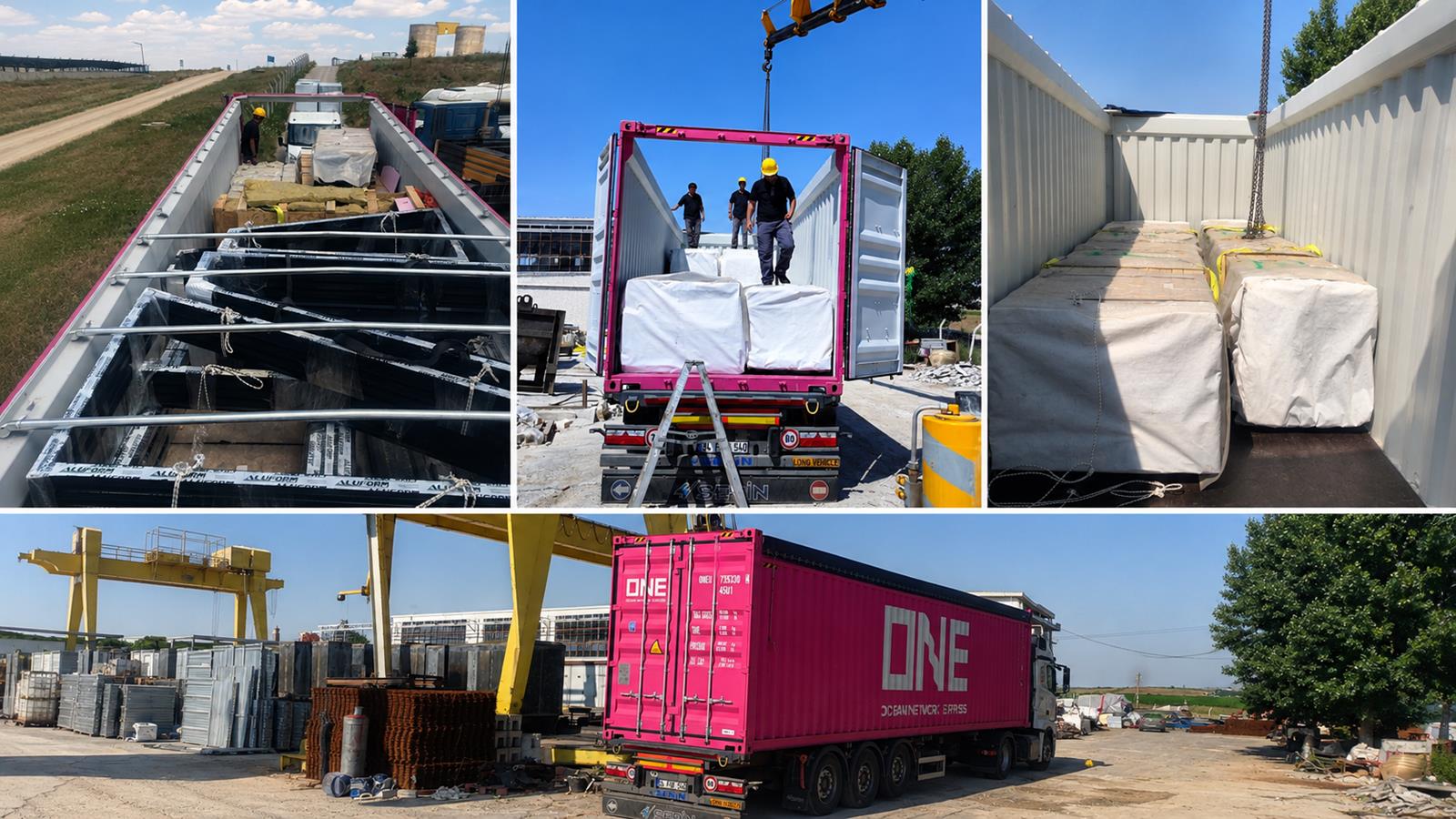
At first, we planned to load the cabin components using wheeled package bases. On paper, that looked practical. But when the container arrived, the condition of the container floor made that method unreliable.
So we changed the method.
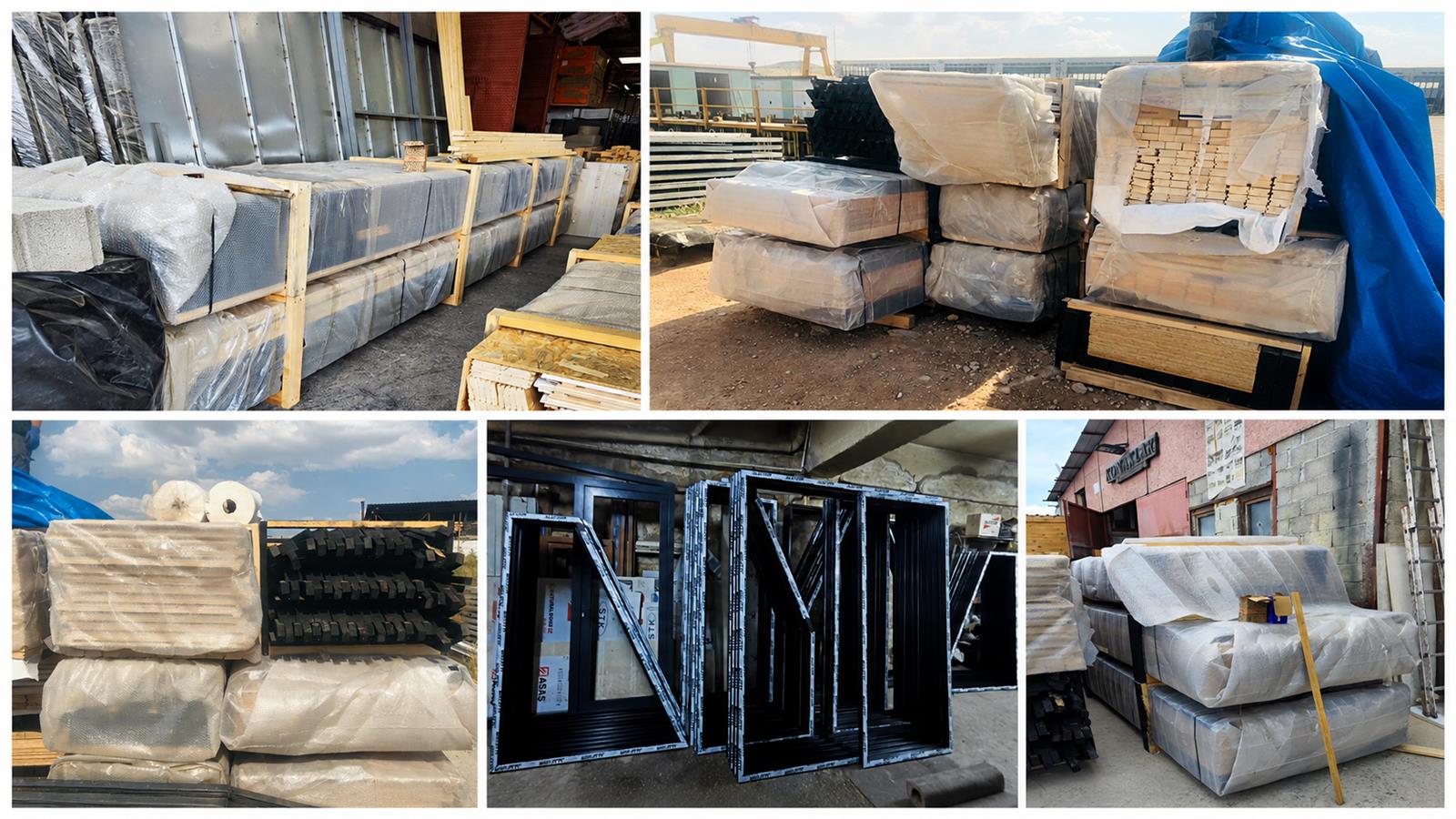
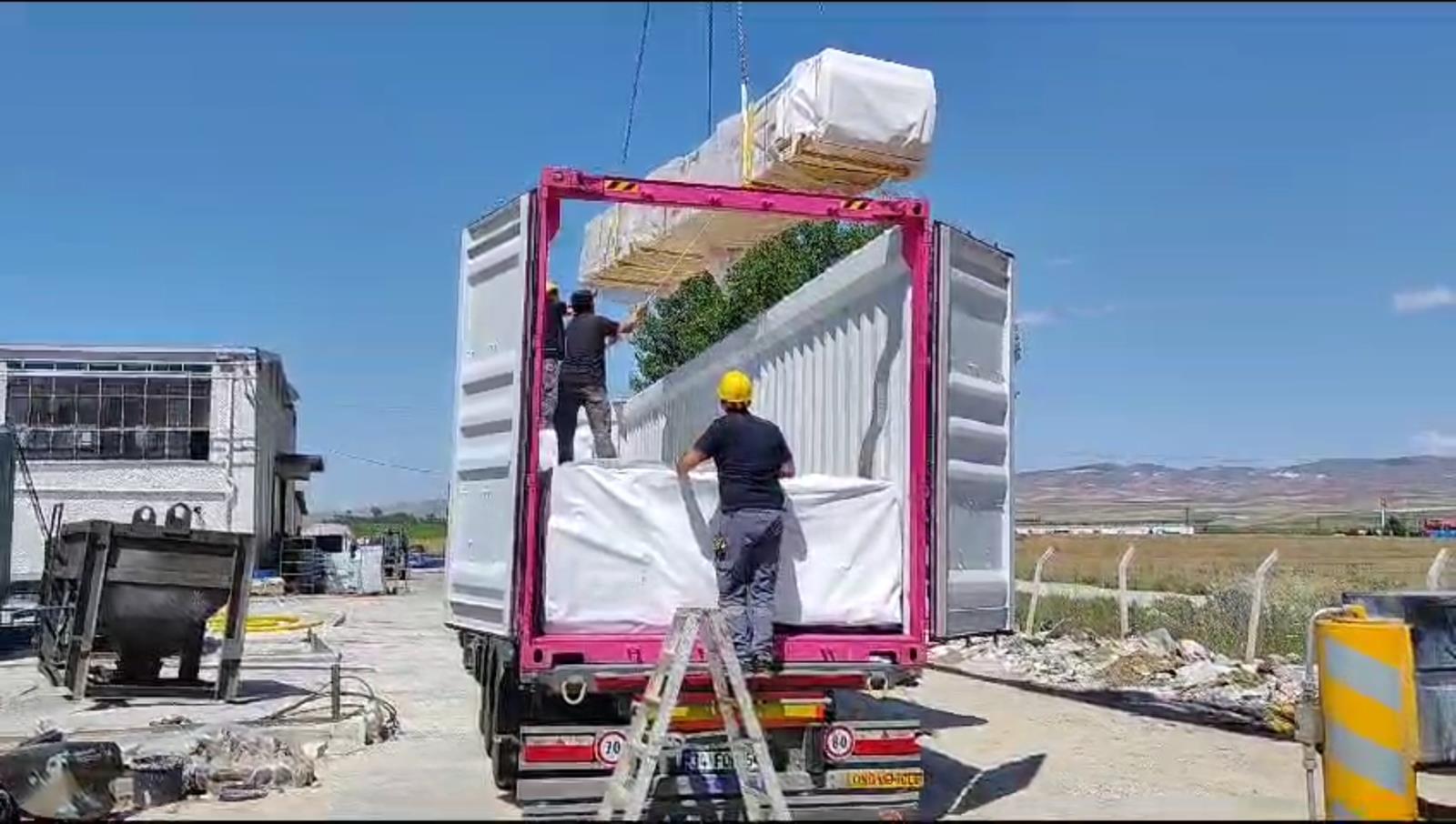
Instead of forcing the original loading plan, we arranged an open-top container and rebuilt the cargo into separate liftable packages. Each major package was prepared with lifting straps, so the components could be loaded from above by crane instead of pushed across the container floor.
This became an important lesson: packaging a cabin kit is not only about protecting the parts. It is also about how the cargo will be loaded, lifted, transferred, unloaded, and possibly transloaded during a long international route.
Customs, Transloading, and Inland Delivery
The Montana shipment showed us that the logistics side of a U.S. cabin kit project had to be planned much earlier than we first expected.
For U.S. shipments, import filings, customs broker coordination, port choice, inland freight, transloading, site unloading, and local assembly preparation all affect the buyer’s final experience. These steps cannot be treated as separate issues to be solved later.
During transloading, some packages were not loaded according to the original package sequence and geometry. As a result, not all packages arrived together as expected.
The separated package included the glass. Because the glass package was not handled with the lifting method we expected, part of the crate was damaged and some glass pieces broke. The issue was resolved together with the customer, and replacement glass pieces were later sent by air cargo.
The lesson was simple: for overseas cabin kits, “ask us if needed” is not enough. The package itself has to tell the crew how it should be handled.
September 2023: Arriving in Montana
In September 2023, after the shipment reached the U.S., we traveled from Türkiye to support the first Montana assembly in person.
This was important for us. We did not want our first U.S. delivery to be only a container shipment. We wanted to see how the kit would be received, unloaded, understood, and assembled by a local team under real U.S. site conditions.
The trip itself was not simple. Severe weather and flight disruptions caused delays before we could reach Montana. But the main point remained the same: international cabin kit delivery is not only about manufacturing. It is about staying involved until the system works on the buyer’s site.
When we finally reached the project location, the real learning phase began.
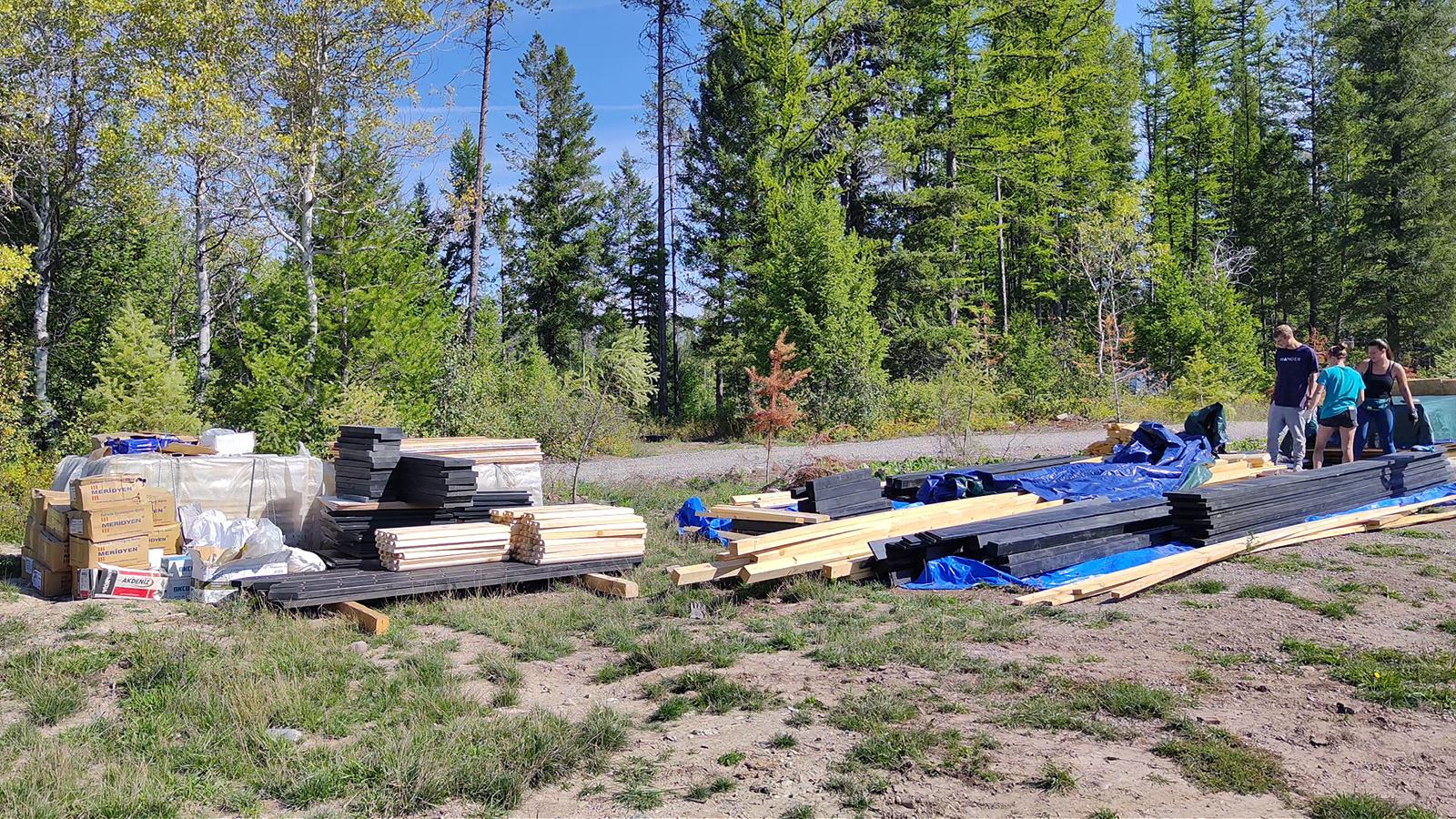
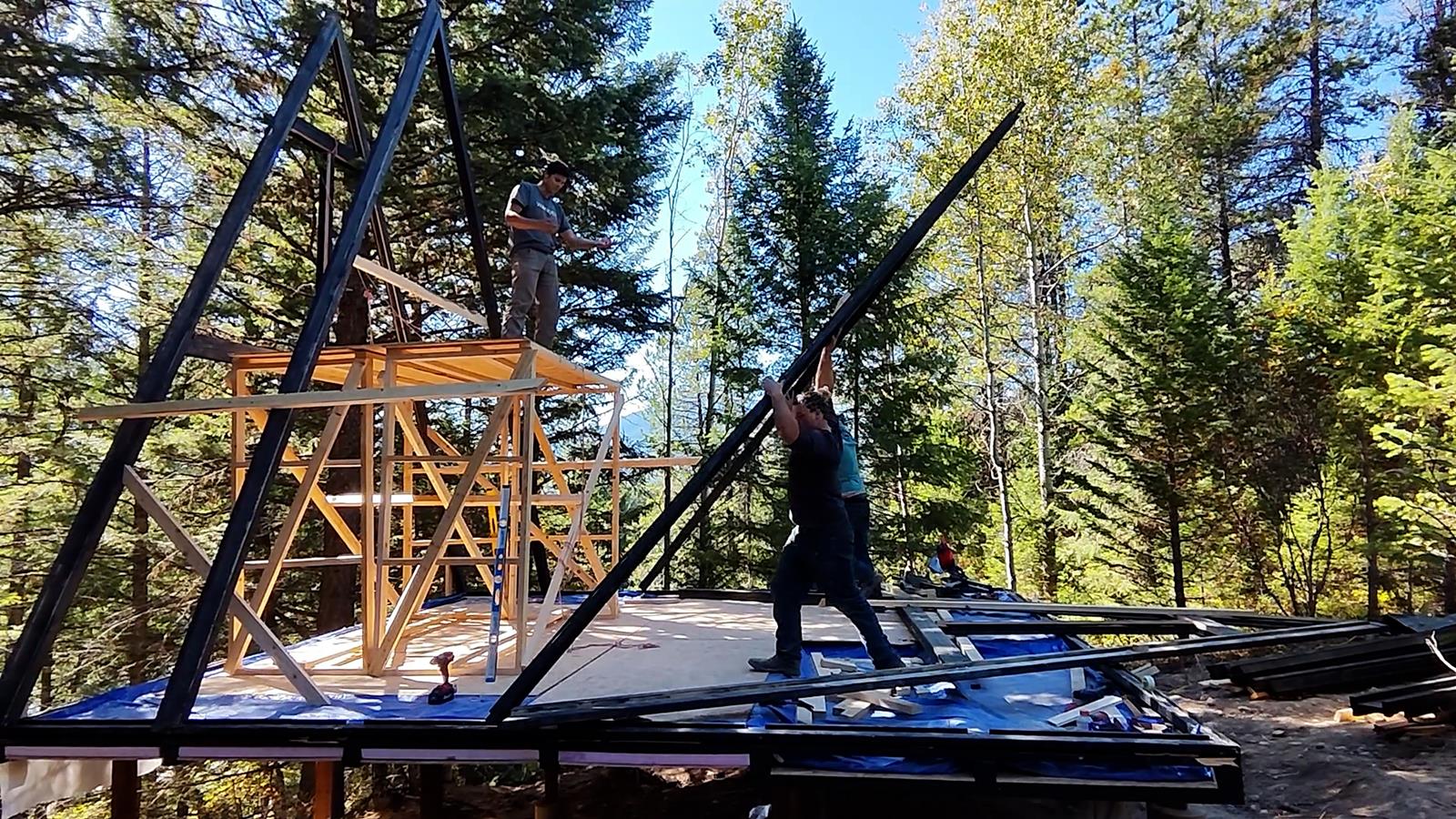
Site Readiness Became the Real Test
The cabins were planned across a very large property, placed where the views were strongest. From a rental-experience point of view, that made sense. From a construction point of view, it created major site-readiness challenges.
There was no proper internal access road through the wooded areas. Only the concrete supports for one cabin were partially prepared. The other cabin locations were not fully opened or ready for assembly.
That became one of the clearest lessons from Montana.
A fast prefab cabin kit still needs a prepared site. The kit can reduce cutting, framing time, and on-site uncertainty, but it cannot replace access roads, foundation preparation, unloading areas, equipment planning, and clear cabin locations.
A successful A-frame cabin kit assembly does not start on the day the first beam is lifted. It starts earlier, with the land prepared, the access planned, and the supports completed.
Working With a Local Crew
In many of our previous projects, we were used to working either with our own construction teams or with construction companies that already understood site organization, sequencing, equipment planning, and the rhythm of a building project.
Montana was different.
The local team was motivated and willing to work, but this was not the same as working with a crew that had already built many houses from the ground up. Their experience was closer to general repair and small construction work than full cabin assembly.
But there was one important thing on site: everyone wanted to make it work.
That mattered.
Montana showed us that motivation is valuable, but motivation alone is not a construction plan. A good wooden cabin kit can reduce cutting, measuring, framing complexity, and material waste, but it still needs basic construction organization.
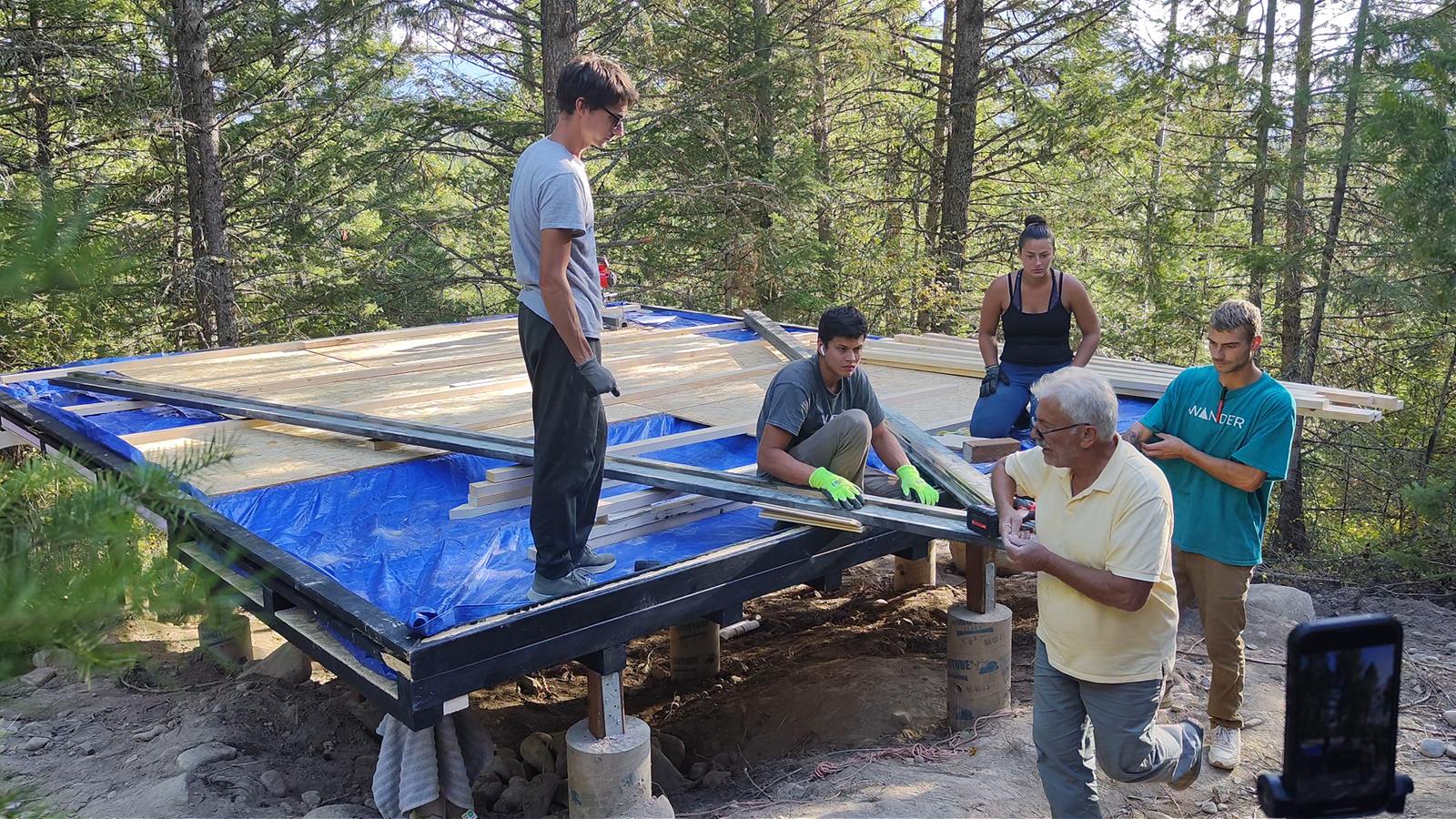
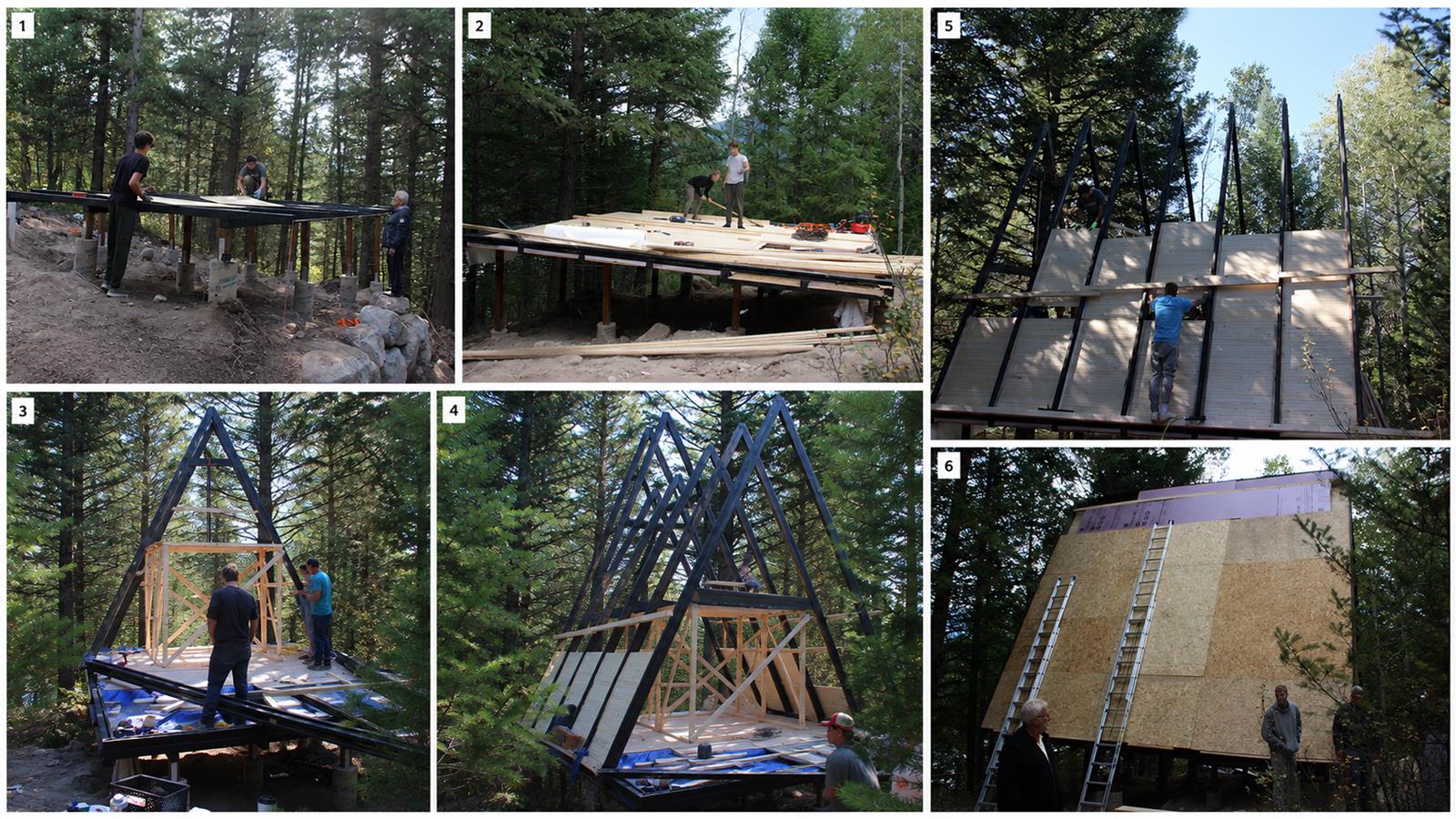
Making the First Montana Assembly Work
Our original plan was to stay on site for about 15 days. Because of the site conditions and the amount of local preparation still needed, we extended our stay and remained in Montana for 22 days.
This was not a controlled factory-style assembly environment. The site was remote, the cabins were spread across a large wooded property, access was limited, and basic site equipment was still being arranged during the process.
The customer expanded the local crew and worked to bring the missing items to a workable level. On our side, we adapted to the site conditions and developed practical solutions in the field.
In around 14 working days of actual site work, the first cabin reached a major completion stage. The crawl / base structure was built, the main frame was assembled, the roof was covered, the insulation was installed, and the core structure was completed. A large part of the exterior shell was also finished.
The second cabin also moved forward during the same period. Its framing stage was completed, and the roof layers had started.
What Montana Changed for Our U.S. Cabin Kit Process
Montana became our first real U.S. proof point, but it also became a textbook project for learning what had to change.
After Montana, we paid more attention to the full project path, not only the cabin itself.
We improved how we think about A-frame cabin kit sizing, insulation requirements, container loading, package geometry, glass packaging, customs broker coordination, inland freight, transloading, site-readiness checklists, required tools, local crew preparation, assembly documentation, and practical tolerances for first-time kit assembly.
The most important lesson was clear: for U.S. projects, manufacturing, freight, customs, delivery, site preparation, and assembly support cannot be treated as disconnected steps. They all affect the buyer’s final experience.
A good wooden cabin kit is not only a set of well-made parts. It is a system that has to survive the full journey from design to production, from factory to container, from port to inland trucking, from unloading to local assembly, and finally from shell to finished use.
Montana helped us understand that more clearly than any video or email conversation could.